Cloud Kitchen Delivery Bags for UAE Food Brands
A cloud kitchen can prepare several brands behind one dispatch counter. Its carriers should support identification rather than create another source of confusion. ThermalBags.ae supplies custom thermal delivery bags from Sharjah for UAE food businesses. For a shared kitchen, the strongest brief connects brand ownership, order packaging and the people handing meals to couriers. A clear ticket position and suitable opening can matter as much as the exterior colour.
Plan the service and handover
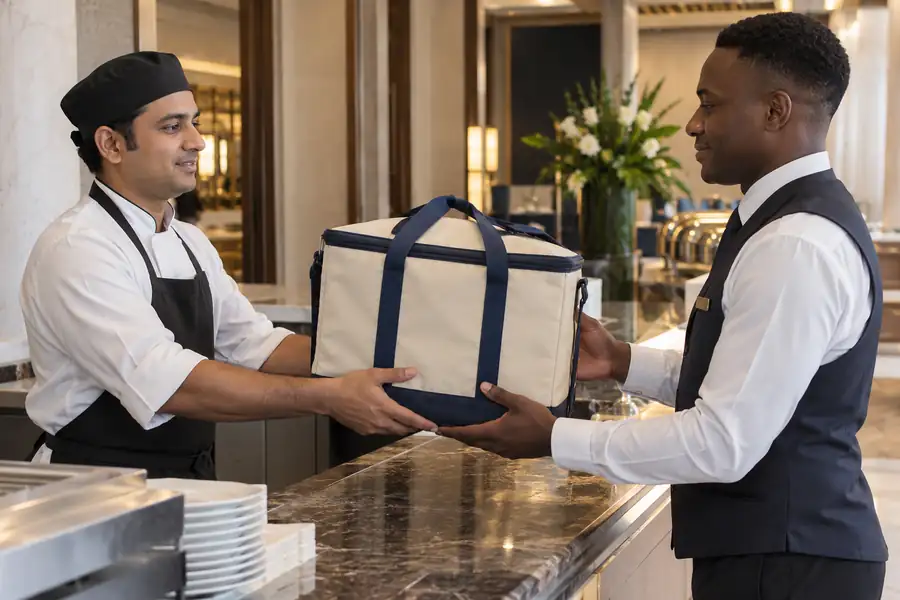
Separate assembly from courier handover. Give completed orders an agreed location before loading. Establish whether bags belong to the kitchen operator, individual brands or a dedicated fleet; ownership affects identification and returns.
A shared kitchen should decide whether the bag follows a brand, dispatch lane or courier. These assignments can overlap, so one clear ownership rule is important. Keep the permanent asset identity separate from the order being carried. Keep this decision in the written operating brief and identify the person who will confirm it during sampling. The proposed feature can then be judged against a real task rather than a general preference. When the service arrangement changes, review the affected part of the specification before extending the earlier approval. That gives purchasing and the people using the bags the same practical reference for the order.
Specify useful dimensions and package clearance
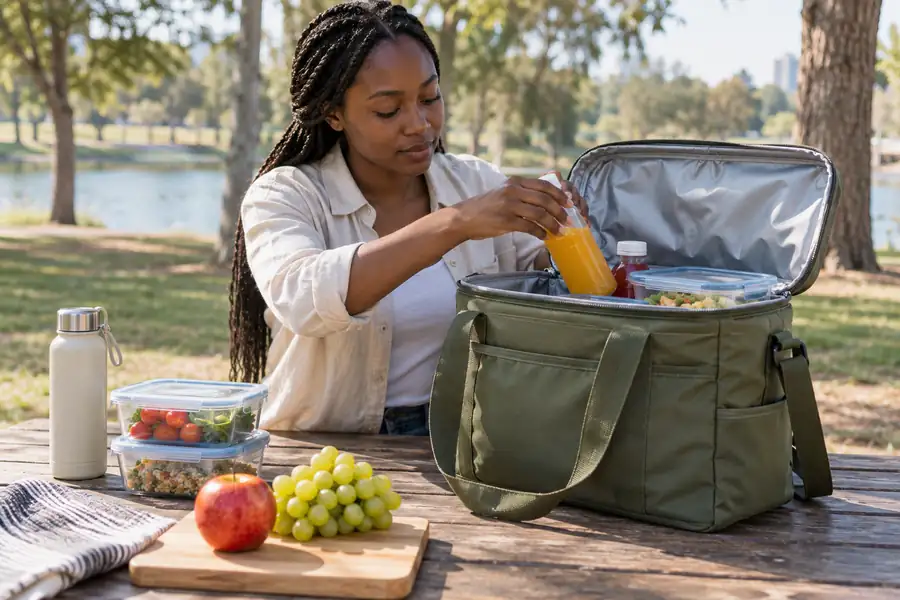
Collect packaging from every participating brand. Tall bowls and flat trays need different arrangements even at similar volumes. Test common combinations and realistic peak orders, not an imaginary maximum load.
Compare packaging across the brands rather than averaging their sizes. One unusually tall bowl may need a separate format instead of making every carrier taller. Record which menu families the shared specification actually accommodates. Record the measurement and the loading observation together, using centimetres and a clear distinction between package, internal space and external size. A photograph of the closed package arrangement can support the drawing. Retain the accepted reference for repeat orders, and revisit it whenever packaging changes. This prevents a familiar catalogue name from concealing a dimensional difference that matters to the people preparing or receiving the load.
Choose handles and carrying details
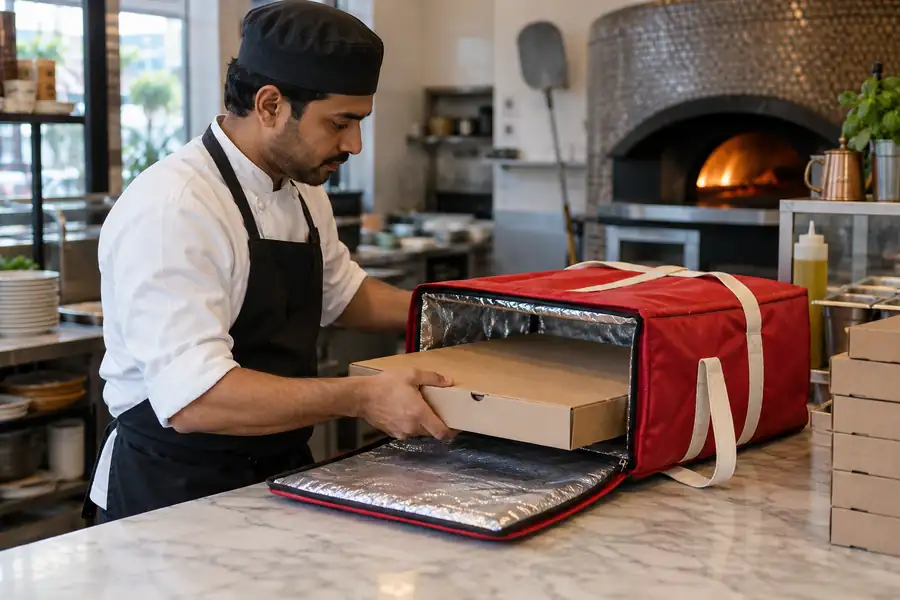
A front opening may suit shelf handover; a top opening may suit an open counter. Watch staff pack real orders. Ticket pockets and zip pulls must remain accessible when several bags stand close together.
Several carriers may stand tightly together at the dispatch shelf. Check that staff can reach the correct closure and handle without moving neighbouring orders. Access requirements can influence pocket position more than the front-facing catalogue appearance. Include the observation in the sample review and ask the intended users to confirm the preferred method. If a change is needed, assess the revised arrangement with the same representative contents. Do not treat an empty-bag demonstration as approval of every filled load. Where the business requires a specific handling standard or documented rating, state that requirement separately so it can be reviewed explicitly before the order.
Review fabric, insulation and lining
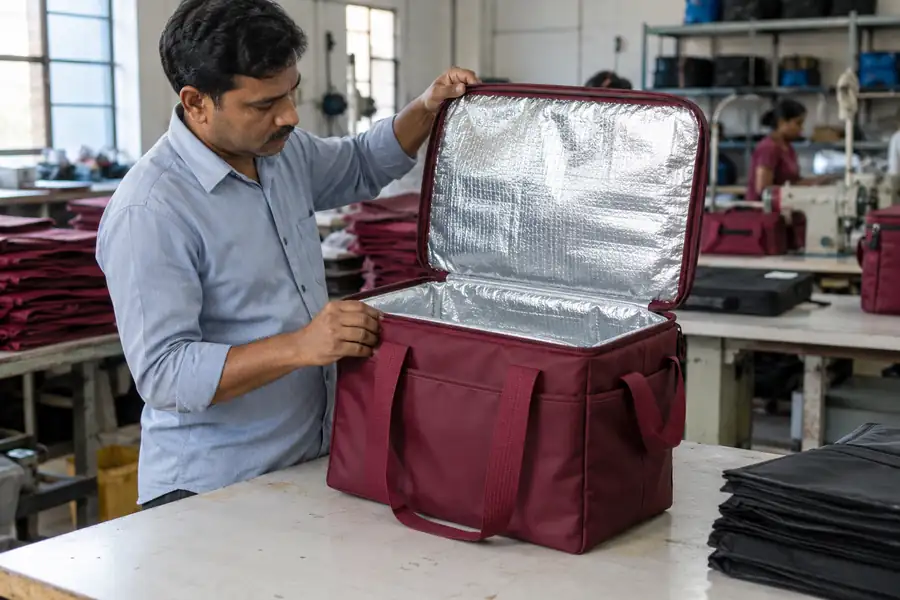
Dividers organise sealed packs but do not prove allergen isolation or temperature separation. Follow the kitchen food-handling procedure and evaluate liner access. Shared use should never obscure responsibility for cleaning and inspection.
A removable divider may help sort orders but also adds a component to inspect and clean. Decide who checks it on return. Do not treat its presence as proof of allergen isolation or independent temperature compartments. Put the relevant requirement into the enquiry so the proposed materials and construction can be reviewed against it. Ask for clarification where a description is incomplete, and retain any agreed material reference with the sample record. The business remains responsible for its operating and food-handling procedures. A useful quotation identifies the construction being offered without borrowing unverified performance claims from another product or a similar-looking reference photograph.
Approve colours, straps and printing
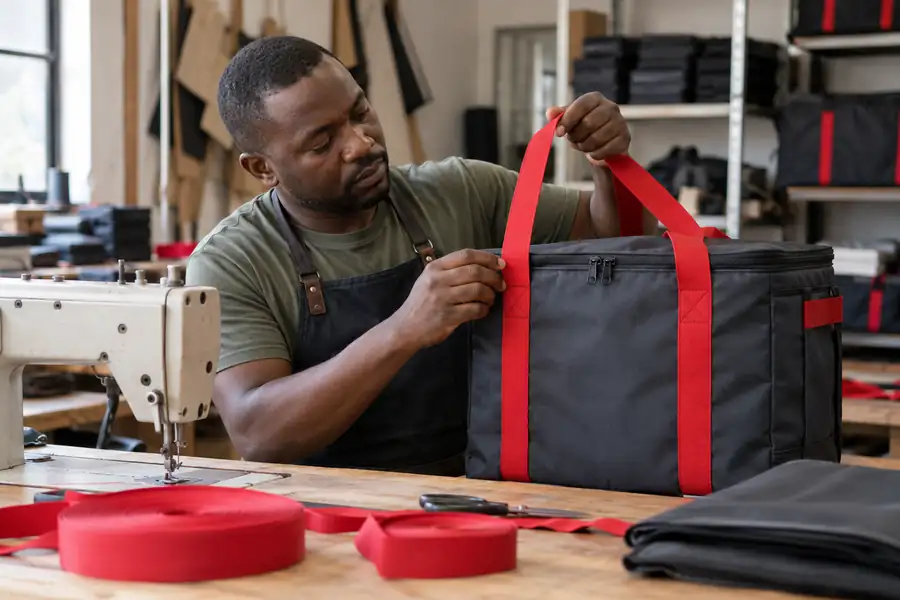
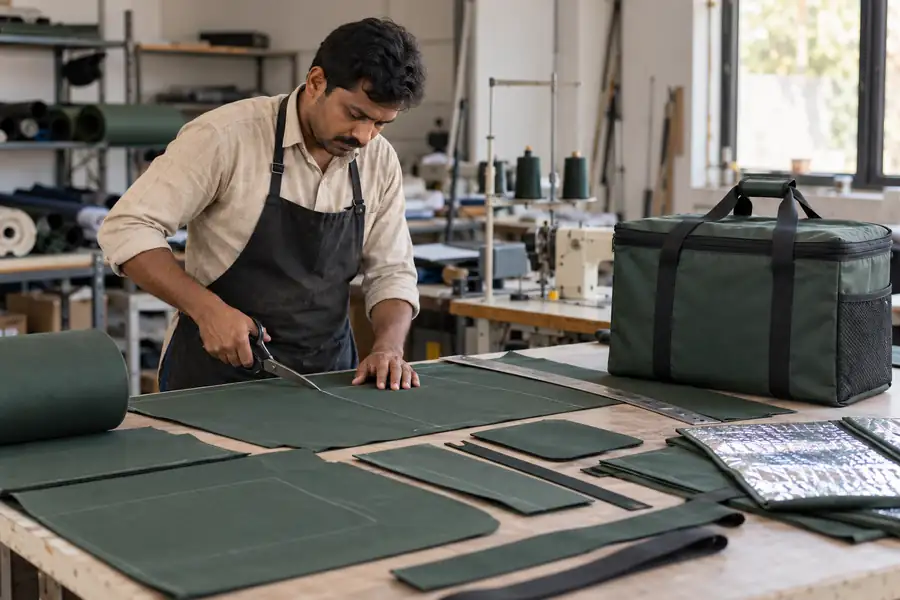
An operator-owned bag may suit neutral printing with replaceable brand identifiers. A dedicated fleet may prefer permanent branding. Record artwork ownership and approve the panel arrangement before production.
Virtual brands can change more quickly than the physical carrier. Where the operator owns the bags, consider a stable main identity and replaceable brand information. Keep the approved artwork rights and revision clear for each permanent print. Record the accepted position, colour reference and artwork revision for the particular bag configuration. Review the result on the selected material at its intended size. A screen mockup helps communicate layout but does not replace physical shade and print approval. If several variations are ordered, keep their quantities and identifiers distinct so the receiving team can compare the delivered bags with the approved visual reference.
Prepare a practical care and return routine
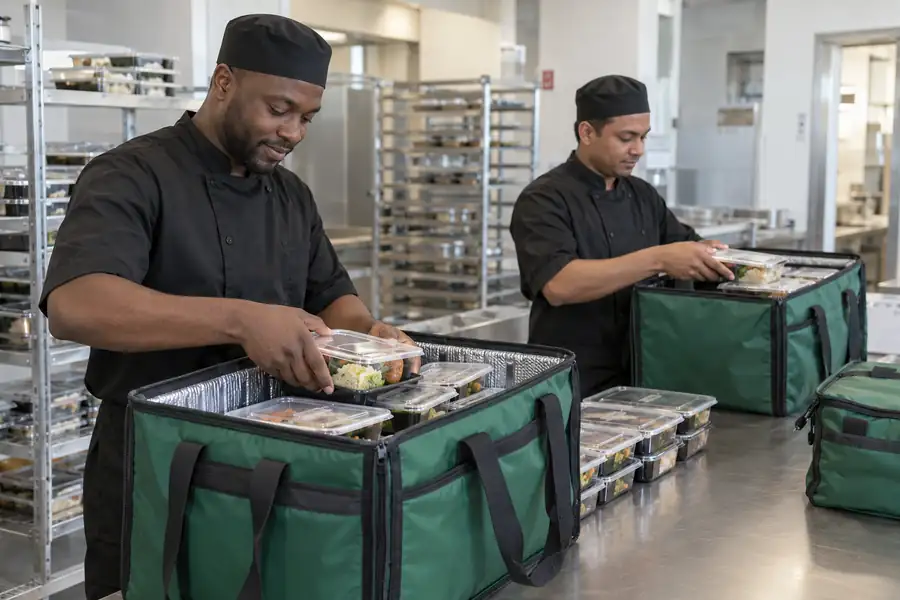
Assign asset numbers so damage and cleaning follow the individual carrier. Separate ready bags from returns. Inspect closures frequently because rushed, repeated use can expose weaknesses sooner than occasional service.
Pooled bags need traceable inspection because several teams may use the same equipment. An asset number allows a damaged closure to be reported accurately instead of describing only a colour shared by many carriers. Agree the responsibility and the material-appropriate care method before issuing the bags. Keep carriers awaiting attention separate from ready stock and make the inspection points understandable to the people using them. Record recurring wear so it can inform a later design review. A clear return process supports the investment in custom equipment and avoids repeated replacement without understanding whether the underlying issue concerns loading, handling, construction or storage.
Evaluate a representative sample
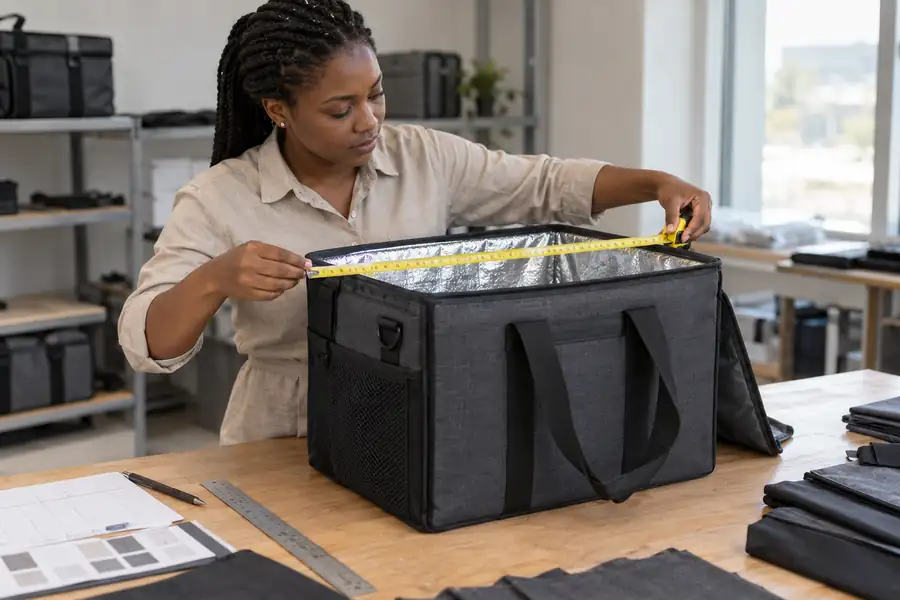
Simulate several orders arriving together. Check identification, loading without squeezing packaging and handover without reopening unrelated orders. Record operational mistakes as well as physical fit problems.
Simulate a realistic queue with different brand packages. Ask staff to identify and hand over one order while other carriers remain closed. Observe whether the layout encourages accidental movement or opening of the wrong bag. Record what was checked, the sample revision and any unresolved point. Ask both the loading and receiving users to comment where their responsibilities differ. A useful approval states its scope rather than implying that every possible application has been demonstrated. Keep the observations with the order reference so a revised size, material or operating method can be compared with the configuration that was actually assessed.
Build a clear UAE wholesale enquiry
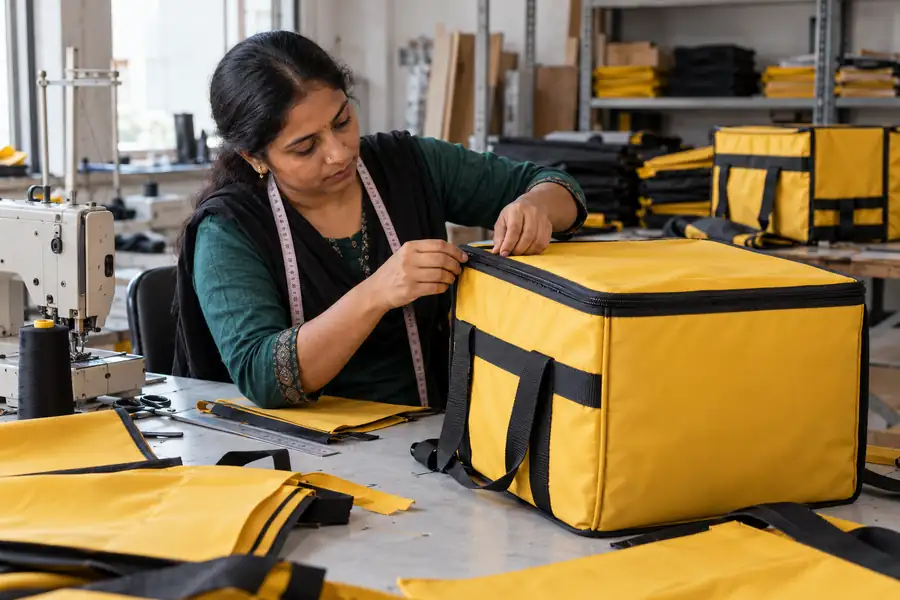
List brands, packaging sizes, bag ownership and labelling methods. Separate quantities by size and permanent print. Identify which information should remain fixed if the virtual brand mix changes.
Prepare one reference pack containing the loading brief, measurements, selected design direction, artwork and quantities. This makes the conversation easier for purchasing and operations to follow. Identify where you need advice and where a requirement is fixed. Ask the quotation to confirm its scope, sample arrangements and proposed delivery plan. A clear written proposal is the basis for the order; general catalogue descriptions are a starting point for discussion. Keep the accepted version available so subsequent reorders can refer to it without reconstructing decisions from old messages.

An operational example to discuss
A shared kitchen could use one structural specification with different handle colours for dispatch lanes. This may simplify replacements while retaining visual cues. It still requires an order check: a coloured strap is not evidence that the correct meal is inside.
For cloud kitchens and multi-brand dispatch teams, the example is a starting point for discussion rather than a fixed specification. Compare it with your own sealed orders from several food brands. The most useful decision is the one that improves multi-brand identification and counter flow in the actual operation. Bring that comparison to the sample review and identify any requirement that differs. This keeps the design conversation grounded in the work the bag must perform, instead of allowing an attractive colour or a familiar catalogue shape to determine the whole purchase.
Choose ownership before choosing permanent branding
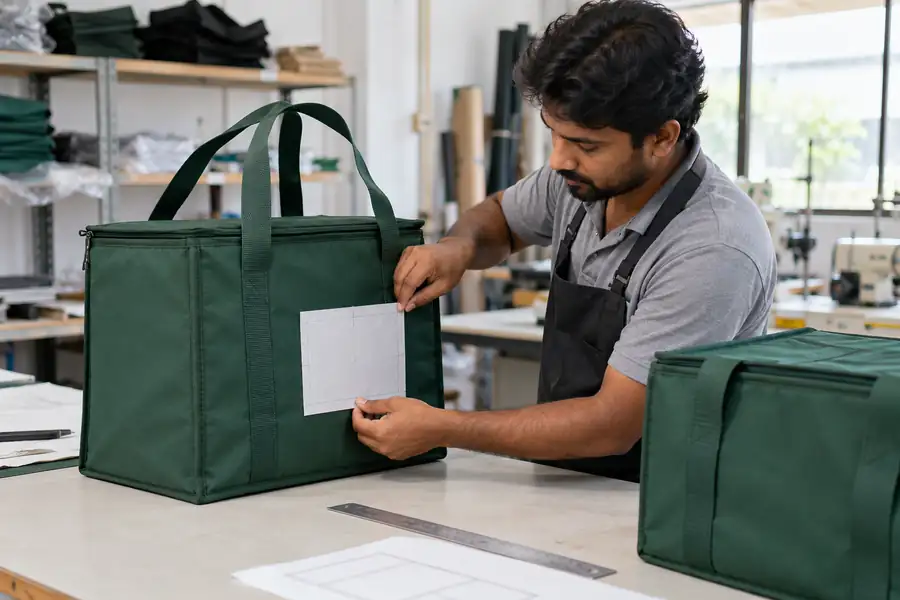
In a shared kitchen, a carrier may belong to the operator, a restaurant brand or a delivery partner. Establishing that ownership early prevents conflicts over printing, cleaning and replacement. An operator-controlled bag might use neutral branding with an order identifier, while a brand-controlled fleet may want permanent visual identity. Neither choice is universally better. The appropriate design follows the actual operating agreement and the people accountable for the equipment.
A useful sample exercise is to place several closed carriers together as they would appear during a busy period. Ask staff to identify the right order using the proposed labels, then check whether the identifier remains visible when a courier picks up the bag. Observe whether a handle covers the ticket or whether bags have to be moved repeatedly to read them. Correcting the label position can be more useful than adding another internal compartment. Keep asset identification separate from the changing order number so the carrier can be tracked through returns. If brands or menus change regularly, reserve flexibility in the layout instead of permanently printing information likely to become obsolete. The objective is a repeatable dispatch system that remains understandable as the kitchen’s business changes.
Can several brands share one bag construction?
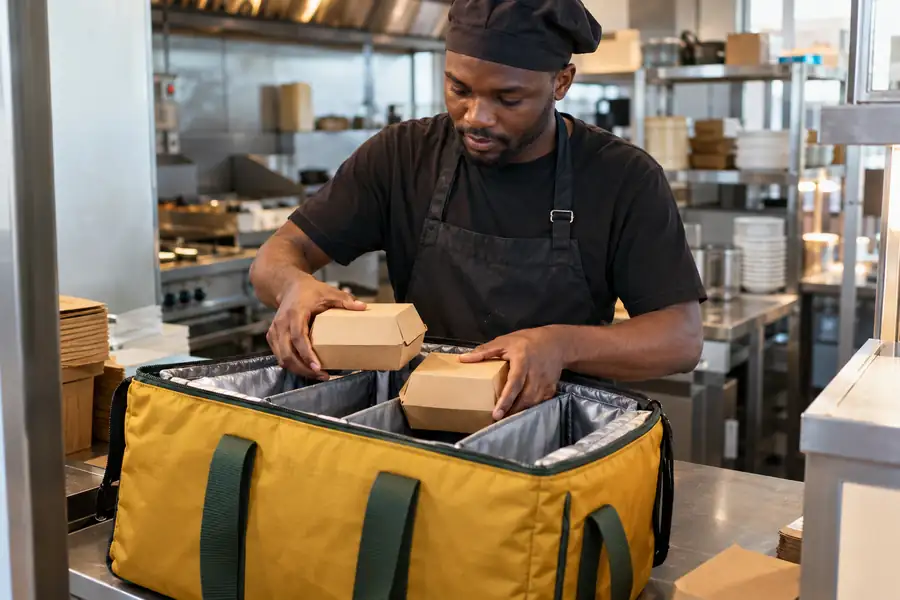
They can if packaging and handling requirements are compatible. Identification can vary. Test each brand’s normal order before approving one size, particularly where bowl heights and carton footprints differ.
Supply from Sharjah across the UAE
ThermalBags.ae is part of Orient Uniforms FZE. Our office is at Block C VL01-080, Sharjah Research, Technology and Innovation Park, Sharjah, UAE. We handle business enquiries for supply and delivery from Sharjah to Dubai, Abu Dhabi, Ajman, Al Ain, Ras Al Khaimah, Fujairah and Umm Al Quwain, as well as Sharjah. Delivery arrangements are discussed for the order; these service destinations do not imply separate local offices. Tell us where the bags are required and whether the order needs one receiving point or several allocations.
To discuss cloud kitchen delivery bags UAE, call or WhatsApp +971 50 599 2087 or email sales@orientuniforms.ae. Include your company, intended use, quantity and package dimensions. You can also identify a catalogue product as a visual starting point. For this application, a useful direction is a structured carrier with a clear order-label position, with fabric and colours reviewed against your brief. The catalogue covers cooler bags, food delivery bags, rider bags, pizza delivery bags and burger delivery bags. Prices and construction details are confirmed through a business quotation rather than online checkout.
Further reading and reference sources
| Decision | Information to send |
|---|---|
| Bag format | Cooler, food delivery, rider, pizza or burger bag; selected SKU if available. |
| Usable size | Closed packaging dimensions, quantities per bag and packed weight. |
| Material & colour | Fabric family, shade reference, contrasting or matching webbing. |
| Branding | Artwork, print location, colours and branch-specific identification. |
| Supply from Sharjah | Bulk quantity, UAE destination, receiving details and required date. |