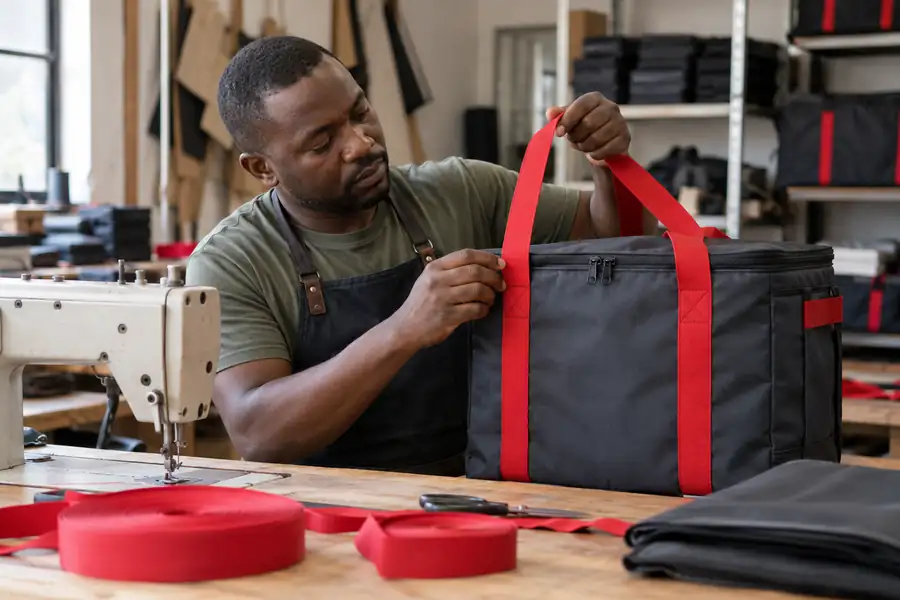
Thermal bags for Ajman restaurants and businesses
ThermalBags.ae supplies wholesale thermal bags to Ajman businesses from Sharjah. Our catalogue is focused on cooler bags, food delivery bags, rider bags, pizza delivery bags and burger delivery bags. We help buyers turn a familiar bag style into a practical specification by discussing internal dimensions, fabric, colour, carrying arrangement and branding. Quantities, sample requirements and delivery terms are confirmed through a quotation.
Ajman's official tourism guide presents a mix of beaches, hospitality, shopping and city activities. For a thermal bag buyer, that variety suggests different everyday uses: restaurant dispatch, hotel meal service, office lunches and packaged food for outings. These are examples for planning a bag order, not statements that a named hotel or attraction uses our products. The business remains based in Sharjah, with Ajman supply coordinated from there.
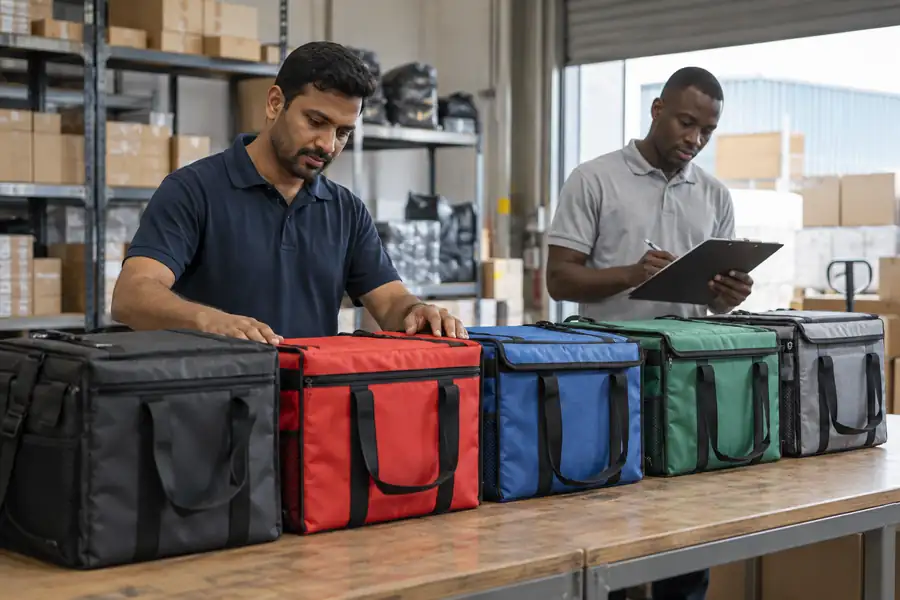
A manageable first order for an independent restaurant
An independent restaurant may be buying branded delivery bags for the first time. Start by identifying the orders that account for most of the kitchen's dispatch work. Measure those containers together and note the occasional larger order separately. This prevents a rare oversized order from forcing every rider to carry an unnecessarily bulky bag during the rest of the shift.
Prepare a short list of priorities before comparing styles. These might include a wide opening, a firm base, comfortable handles and a print panel that is easy to recognise. Optional decorative details can be considered after those requirements are satisfied. If the budget is fixed, ask which changes affect the quotation so the restaurant can make informed choices. A simple, well-specified bag can serve a clear purpose more effectively than a complicated design with features that the team never uses.
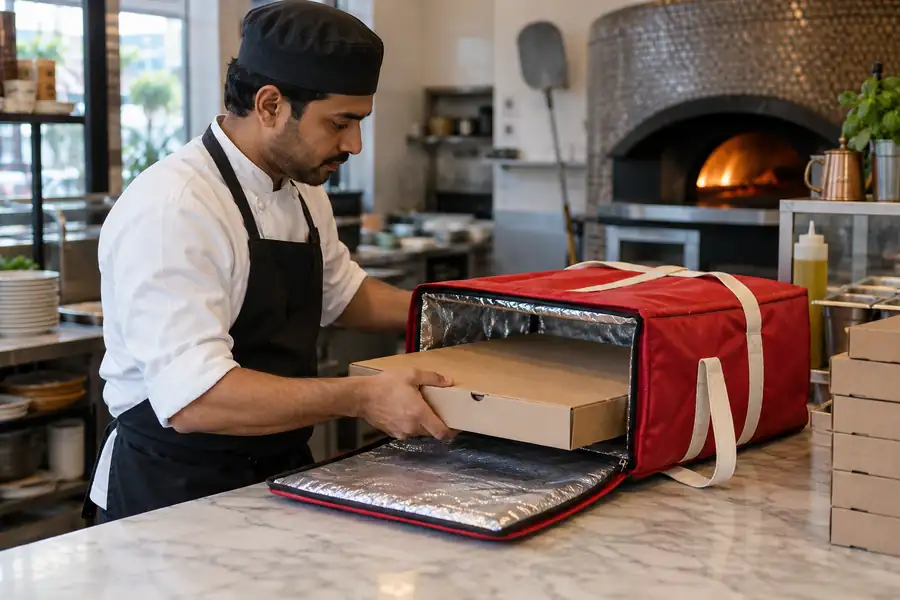
Match pizza bags to the actual box
Pizza businesses should measure their cartons rather than use the menu's pizza size as the bag specification. The carton is wider than the food it contains, and labels, sleeves or stacking arrangements can alter the required clearance. Tell us the normal number of boxes carried together and whether side dishes travel in a separate bag.
A practical sample check includes lifting the full bag and placing it on the dispatch counter without tilting the cartons. Confirm that the handles support a balanced load and that the opening allows the lowest box to be removed easily. If the design includes a front flap, check how that flap is kept clear of unsuitable surfaces during loading. The restaurant should also evaluate the interaction between its packaging and the bag's closure or ventilation arrangement. Good fit and a repeatable loading method are more useful than a generic claim that one pizza bag suits every order.
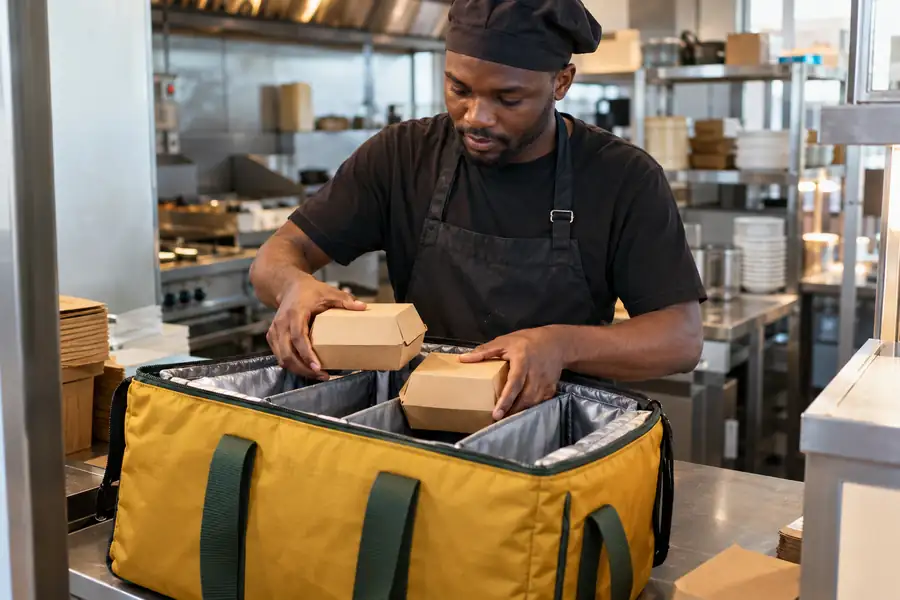
Burger and mixed takeaway orders
A burger outlet often combines tall food packs, side containers and sauces. A compact upright bag can be considered when it allows those items to remain in their intended position. Ask staff to pack a real order in the sample and then remove it in the same sequence they would use at a customer's door. This can reveal whether a divider, wider opening or different internal height is needed.
Where the menu changes frequently, specify a practical range of container sizes rather than one exact arrangement that becomes obsolete quickly. Keep the design disciplined: excessive spare space can allow packs to move, while insufficient clearance makes loading slow. Beverages should use an appropriate separate arrangement within the operator's procedures. A pocket visible in a product image should not be assumed to be a secure drinks holder unless that use has been expressly designed and tested.
Hotel and beachside service considerations
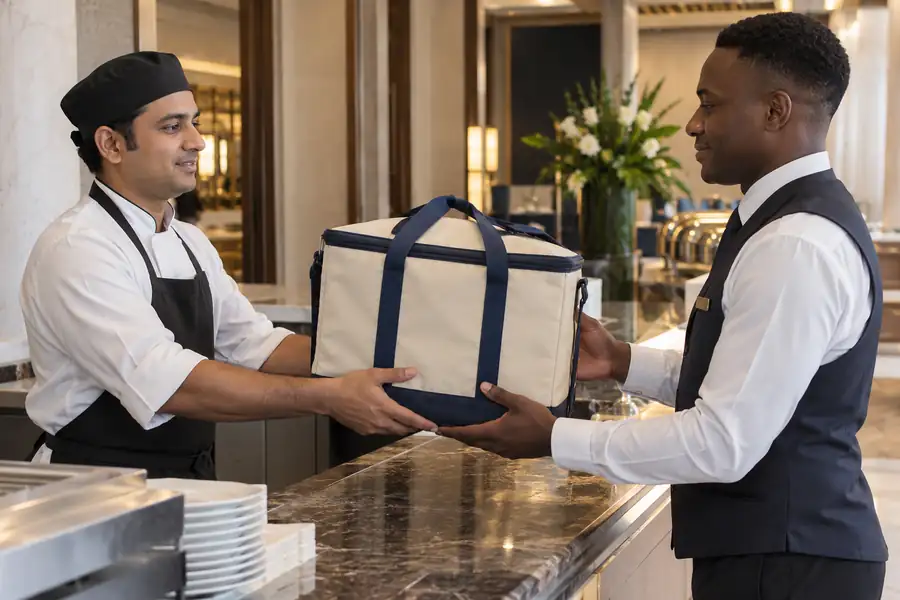
Ajman's coastal hospitality settings can involve bags moving between a kitchen, a service point and an outdoor handover. Buyers should describe whether the bag will be used by staff behind the scenes or presented to guests. A clean, restrained exterior may suit the latter, while a clear department label can be valuable for internal operations.
Ask where the bag will be placed when open and how it will be returned for cleaning. Sand, moisture and repeated handling can affect the care routine even when the bag is not intended to be used directly on a beach. Discuss the appropriate base and outer material for the actual service arrangement. Do not assume that a coated fabric makes the whole sewn bag waterproof. If resistance to a particular exposure is important, include that requirement in the specification and review the proposed construction with the supplier.
Give every bag an identifiable role
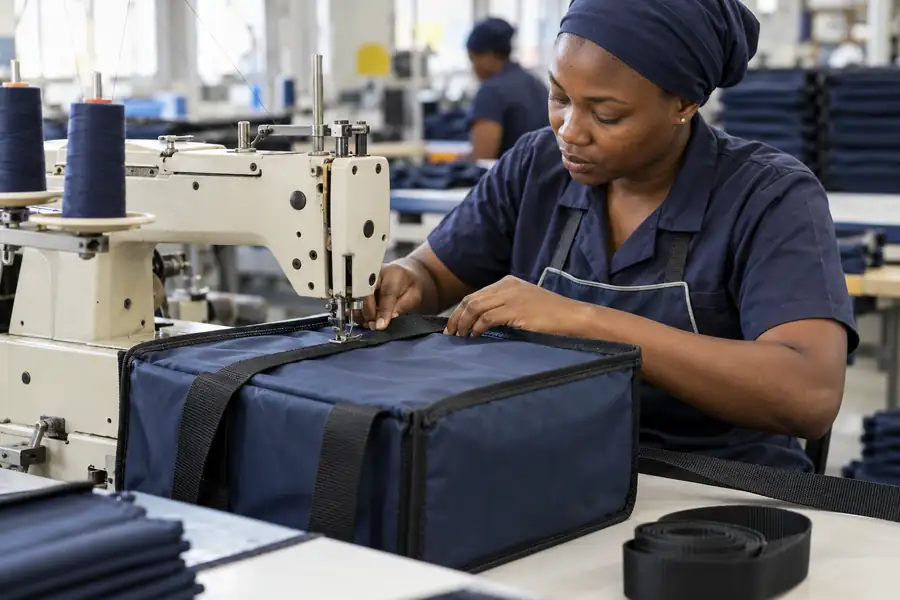
A small business may share delivery equipment between several staff members. Colour-coded straps, an external identification panel or a simple bag number can help track which units are in use, being cleaned or ready for dispatch. The coding should be easy for the team to understand and should not require them to open the food compartment.
Branding should remain readable at a normal distance. Put the business name on the main available panel and keep small contact text to a sensible minimum. If a logo contains fine detail, ask how it will appear on the selected weave and at the proposed size. A large print can cross a seam or be hidden by a handle, so approve its position on the actual bag layout. Keep the final artwork file with the material and dimension reference for later reorders.
Keep procurement practical for Ajman delivery
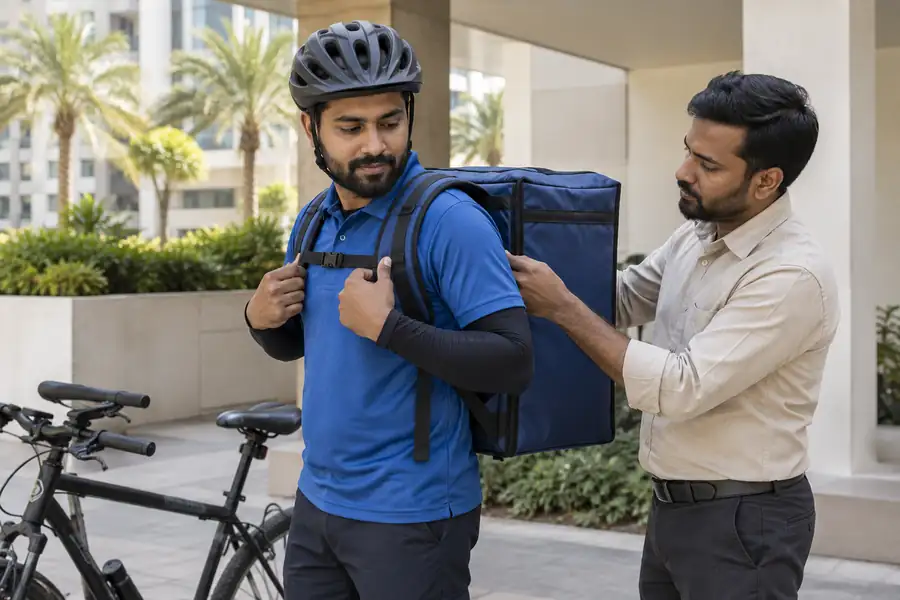
Supply from Sharjah does not remove the need for a clear delivery address and receiving contact. Tell us whether the order is for a restaurant, a hotel receiving area, a warehouse or another business location. Include any access instructions and the name of the person who will count and inspect the bags. Timing and charges are confirmed with the quotation.
For several outlets, a simple allocation sheet can prevent confusion. List the number of each style required at each location and identify whether branding differs. If all outlets use one design, keeping a common specification may make future replacements easier. If their containers differ, do not force the same internal size on every kitchen merely for visual consistency. Matching colours and printing can create a coherent brand appearance while separate bag formats serve different operational needs.
Use a simple outlet allocation sheet
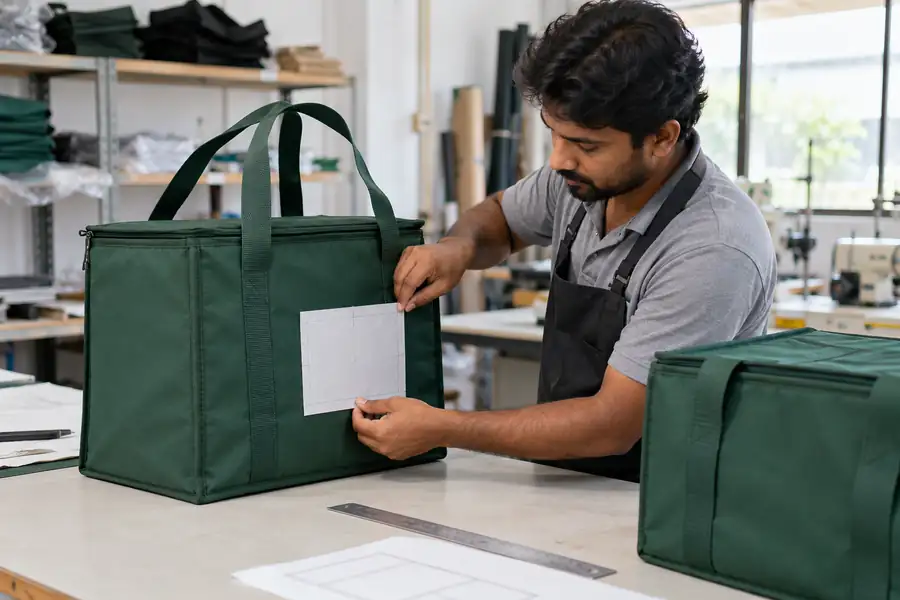
An Ajman restaurant group does not need complicated paperwork to organise a mixed bag order. A short allocation sheet can name each outlet, its required bag format, the quantity and the print version. Add the container dimensions where outlets use different packaging. This makes it easier to see whether a shared design is genuinely suitable or whether one kitchen needs a separate size.
At the sample stage, invite a person who packs orders during a normal service period to review the design. Their feedback on the opening, handle position and loading sequence can be more useful than judging the bag from the manager's desk. Record any change against the allocation sheet so all outlets receive the correct version. Once the order arrives, keep the approved reference with the purchasing records. A later replacement request can then use a specification code instead of a vague description, helping the business maintain a consistent appearance while retaining the dimensions that each kitchen actually needs.
Approve fabric, colour and construction together
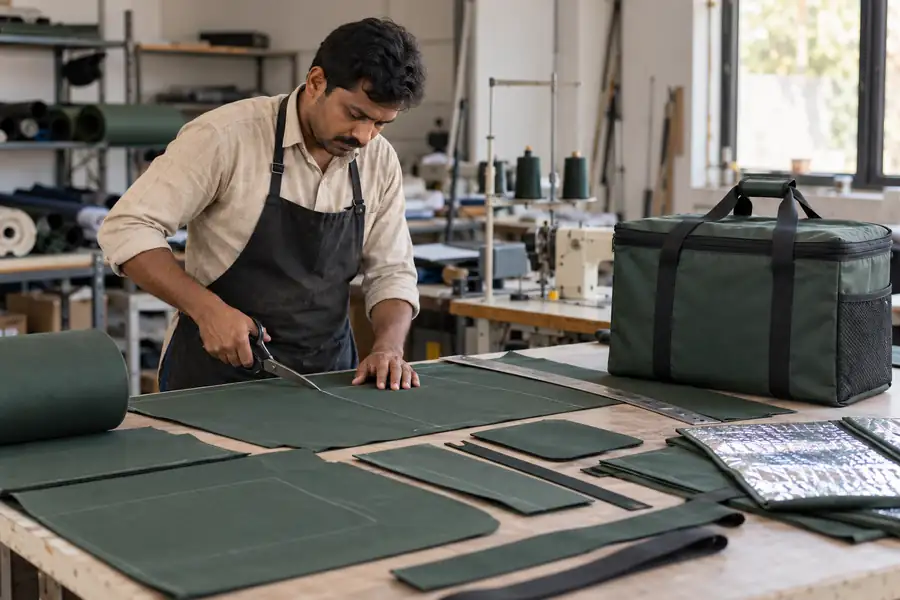
A useful fabric brief states more than a colour name. Ask for the material reference, shade code, surface finish and proposed reinforcement so the sample can be compared with the eventual order. D600 Oxford, Oxford Taffeta, polyester and canvas options have different appearances; the same printed colour can look different on a smooth surface and a textured weave. Choose from the available shade references rather than assuming that every colour exists in every fabric. Nylon options can be discussed separately when the relevant shade references are available.
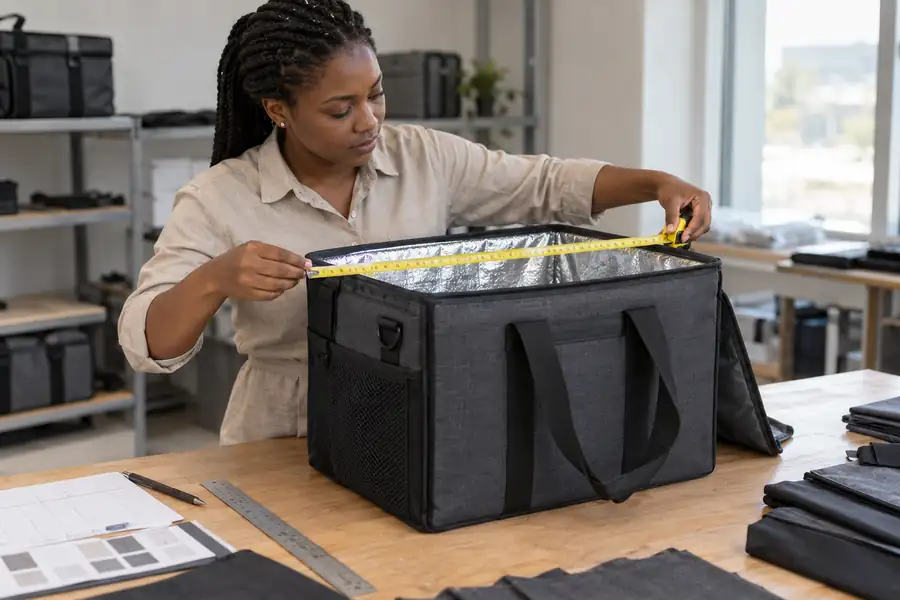
Check the inner dimensions with actual sealed food containers before approving production. Exterior dimensions include the construction and do not describe usable packing space. A lining, insulation layer, divider and zipper opening can each affect fit. Ask the team to show how the largest container enters the bag, how the lid closes, and whether the filled bag remains manageable. Product illustrations communicate a proposed design; a physical sample establishes the agreed material, colour, dimensions and finishing.
A practical sample and cleaning check
Run the sample through a normal shift before placing a bulk order. Pack the usual combination of containers, carry the bag using its intended handles, open it at a realistic handover point and check whether staff can find the correct order without rearranging everything. Record which surfaces touch worktops or vehicle racks. Look for awkward corners, exposed seams, difficult zipper movements and areas where liquids could collect. These observations are more useful than judging the empty bag alone.
Agree a care routine appropriate to the selected lining, outer fabric, print and hardware. Remove food packaging and loose debris after use, clean according to the approved material guidance and allow the bag to dry fully before storage. Separate clean bags from returned bags awaiting cleaning. Thermal bags support the delivery process, but they do not replace temperature checks, appropriate food packaging or the operating procedures of the business. Performance depends on the complete packing and delivery arrangement.
Make the sample a working decision
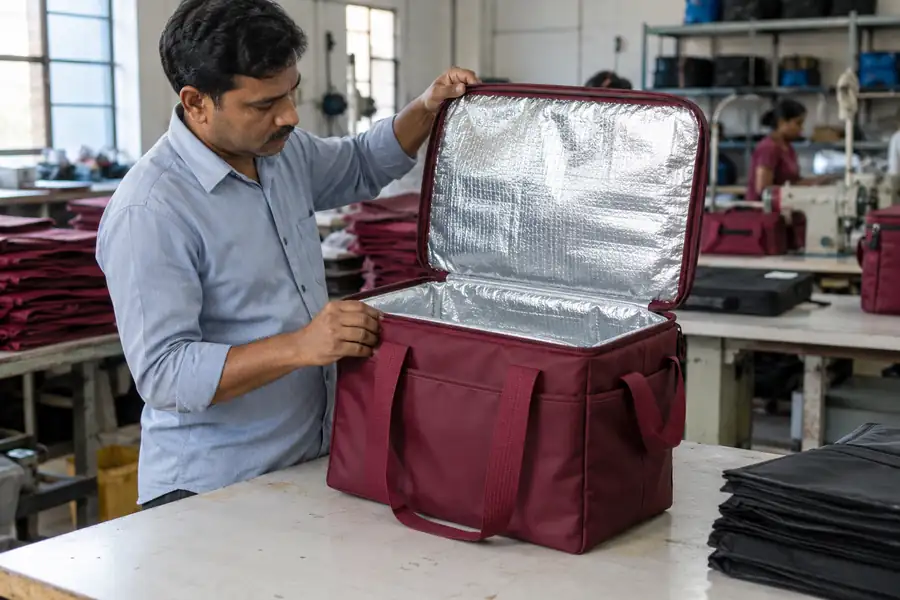
An approved sample should answer the questions that matter during service. Can staff load it without forcing containers? Can the filled bag be lifted comfortably? Does the closure work smoothly when the bag contains the intended order? Is the print readable, and can the lining be cleaned according to the agreed care method? Record the answers and any requested changes before approving the bulk run.
To begin, contact sales@orientuniforms.ae or +971 50 599 2087 with your Ajman location, quantity, preferred bag category and container dimensions. Add the desired fabric, shade and logo if these are already selected. If they are undecided, describe the use and visual preference so the options can be narrowed sensibly. The objective is a clear order brief that connects the chosen appearance with the practical work of packing, carrying, cleaning and reusing the bag.
Further reading and reference sources
| Decision | Information to send |
|---|---|
| Bag format | Cooler, food delivery, rider, pizza or burger bag; selected SKU if available. |
| Usable size | Closed packaging dimensions, quantities per bag and packed weight. |
| Material & colour | Fabric family, shade reference, contrasting or matching webbing. |
| Branding | Artwork, print location, colours and branch-specific identification. |
| Supply from Sharjah | Bulk quantity, UAE destination, receiving details and required date. |