Grocery Delivery Cooler Bags in the UAE
Grocery orders rarely have one predictable shape. A carton, bottle and delicate produce pack each present different handling needs. A grocery cooler should be specified around the actual products and the way orders are picked, checked and delivered. ThermalBags.ae supplies custom insulated bags from Sharjah for UAE grocery businesses. The retailer remains responsible for its approved food-transport process while the bag brief defines practical dimensions, fabric, identification and carrying points.
Plan the service and handover
Define picking zones and separate chilled food, ambient goods and non-food items appropriately. Assign the cooler to the relevant packaged-food portion of the order. Its identifier should agree with the retailer order record at dispatch and receipt.
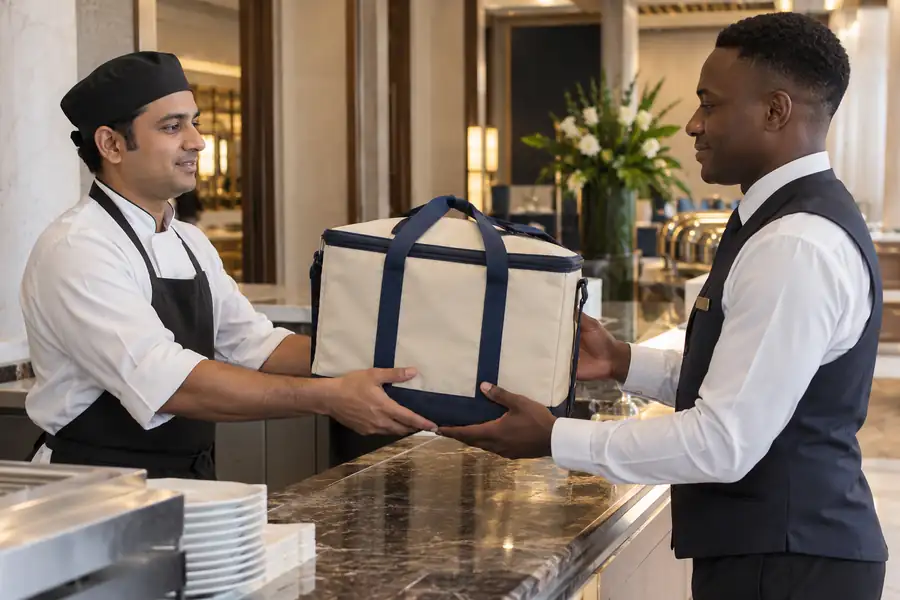
Driver-retained and customer-exchanged coolers create different handovers. Decide whether groceries are removed at the doorstep or the whole carrier changes hands. That decision affects useful opening clearance, identifiers and the number of bags circulating. Keep this decision in the written operating brief and identify the person who will confirm it during sampling. The proposed feature can then be judged against a real task rather than a general preference. When the service arrangement changes, review the affected part of the specification before extending the earlier approval. That gives purchasing and the people using the bags the same practical reference for the order.
Specify useful dimensions and package clearance
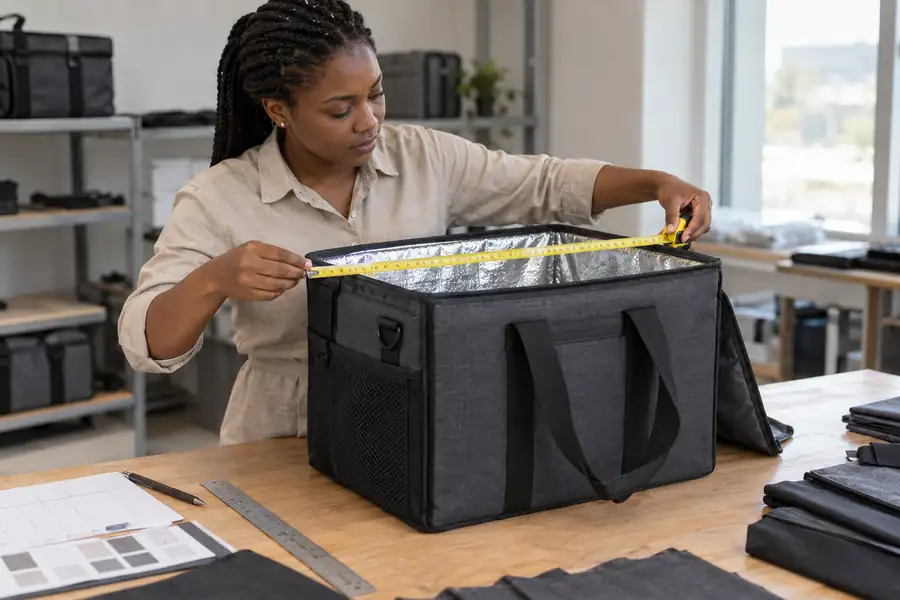
Measure realistic combinations in their retail packaging. A bag sized around a carton alone may not protect a broad produce pack. Check upright bottles and avoid heavier packages pressing against delicate items during carrying.
Use a mixed order that includes the heaviest and most delicate normal packages. Their combined arrangement matters more than the sum of their volumes. Check which package supports another and which must remain free from pressure. Record the measurement and the loading observation together, using centimetres and a clear distinction between package, internal space and external size. A photograph of the closed package arrangement can support the drawing. Retain the accepted reference for repeat orders, and revisit it whenever packaging changes. This prevents a familiar catalogue name from concealing a dimensional difference that matters to the people preparing or receiving the load.
Choose handles and carrying details
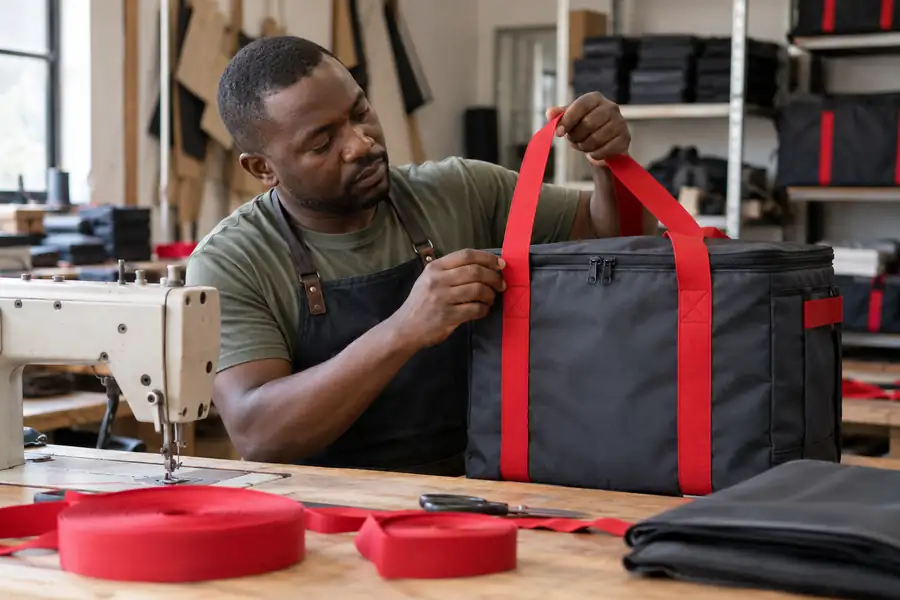
A supportive floor can help preserve the arrangement but does not make every load manageable. Assess filled weight and the walk from vehicle to customer. Handles should gather without pulling fragile packaging inward.
An upright bottle can shift the balance of a partially filled grocery bag. Carry the sample with a smaller order as well as a full one. Avoid assuming that satisfactory handling at maximum fill proves every load is stable. Include the observation in the sample review and ask the intended users to confirm the preferred method. If a change is needed, assess the revised arrangement with the same representative contents. Do not treat an empty-bag demonstration as approval of every filled load. Where the business requires a specific handling standard or documented rating, state that requirement separately so it can be reviewed explicitly before the order.
Review fabric, insulation and lining
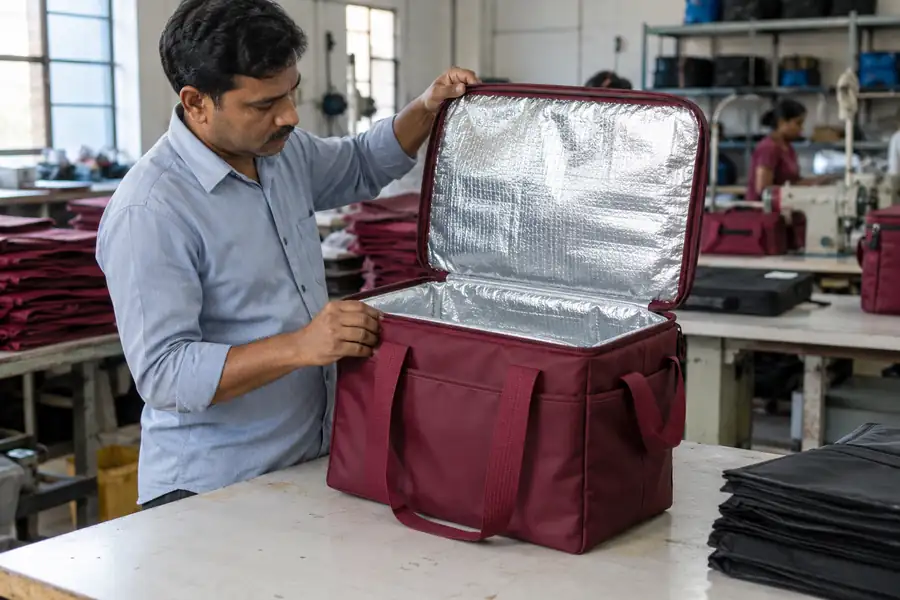
Discuss chilled loads, condensation and cleaning methods during sampling. Passive insulation is not active refrigeration. Temperature claims require defined loads and conditions, with the business assessing the complete transport arrangement.
Chilled groceries and ambient products may require different handling. Define the portion of the order assigned to the cooler. Do not let spare internal space become a reason to mix goods that the retailer’s procedure keeps separate. Put the relevant requirement into the enquiry so the proposed materials and construction can be reviewed against it. Ask for clarification where a description is incomplete, and retain any agreed material reference with the sample record. The business remains responsible for its operating and food-handling procedures. A useful quotation identifies the construction being offered without borrowing unverified performance claims from another product or a similar-looking reference photograph.

Approve colours, straps and printing
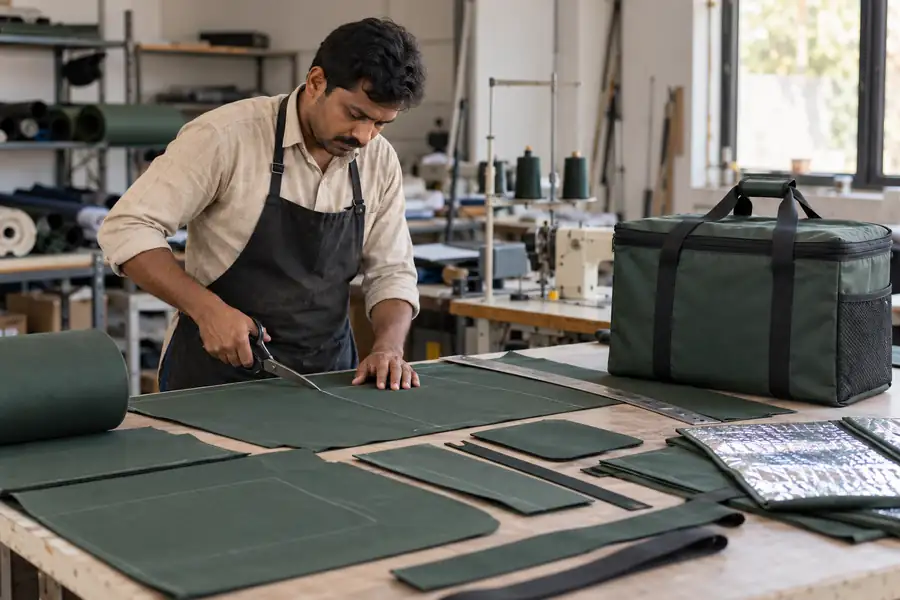
A readable front logo can sit beside an order pocket. Green fabric is a design choice, not proof of environmental performance. Do not print sustainability claims without support for the exact materials and programme.
An order label should identify the grocery delivery while an asset label identifies the reusable bag. Keeping both readable helps recovery without printing customer details permanently on equipment that will be issued to someone else. Record the accepted position, colour reference and artwork revision for the particular bag configuration. Review the result on the selected material at its intended size. A screen mockup helps communicate layout but does not replace physical shade and print approval. If several variations are ordered, keep their quantities and identifiers distinct so the receiving team can compare the delivered bags with the approved visual reference.
Prepare a practical care and return routine
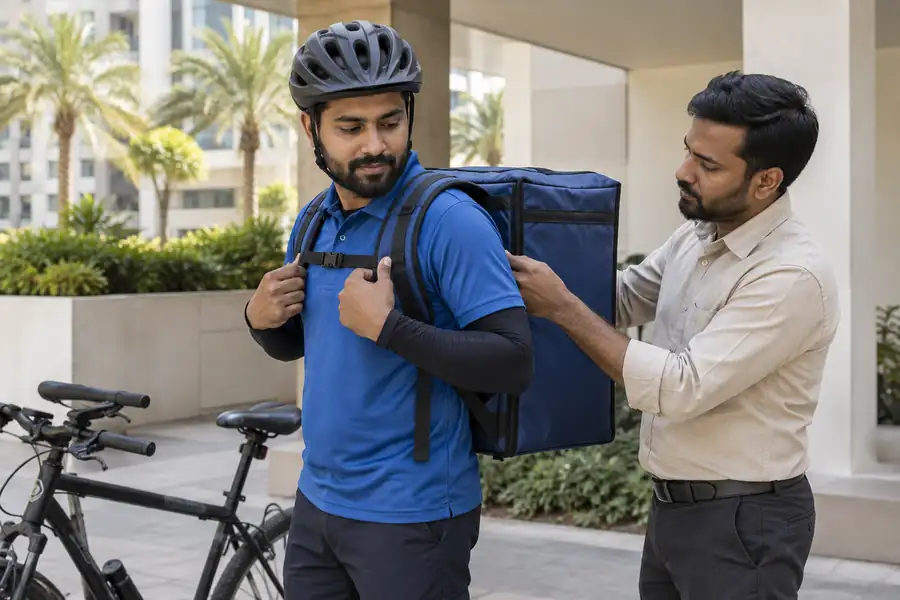
Check for trapped moisture after use and dry bags using the agreed method. Keep ready carriers away from leaking products or cleaning chemicals. Inspect base corners and handles as well as the front panel.
Produce fragments and condensation may collect beneath an internal support. Ask how that area is accessed and dried under the chosen care method. The inspection should reflect actual grocery use rather than only the visible top surfaces. Agree the responsibility and the material-appropriate care method before issuing the bags. Keep carriers awaiting attention separate from ready stock and make the inspection points understandable to the people using them. Record recurring wear so it can inform a later design review. A clear return process supports the investment in custom equipment and avoids repeated replacement without understanding whether the underlying issue concerns loading, handling, construction or storage.
Evaluate a representative sample
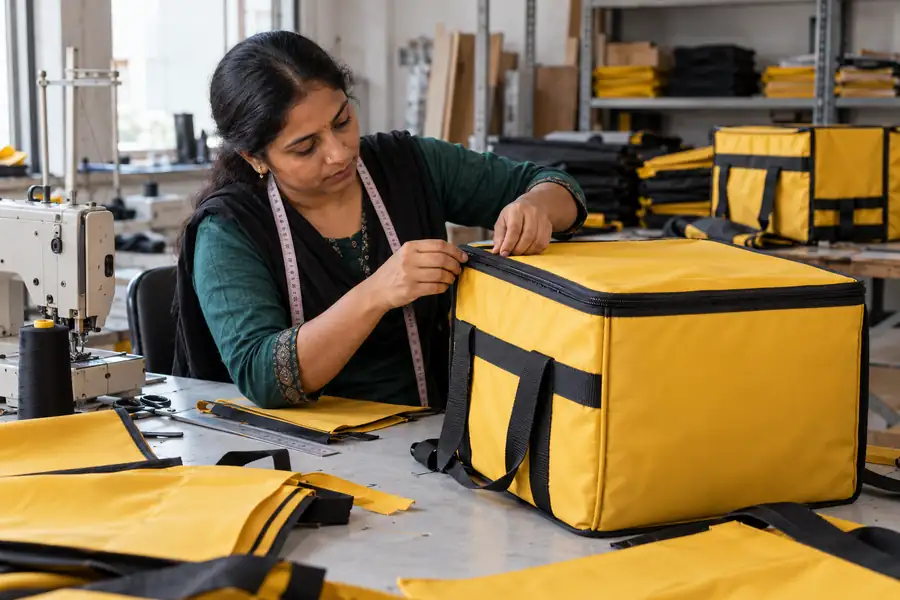
Pack small and mixed larger orders. Carry them through loading and doorstep handover, checking shifted bottles, compressed produce and hidden labels. Assess temperature requirements through the retailer’s controlled procedure.
Test removal at the receiving point using the real order arrangement. If the customer or driver must lift every item to reach a lower pack, consider whether a different size or grouping would make the handover clearer. Record what was checked, the sample revision and any unresolved point. Ask both the loading and receiving users to comment where their responsibilities differ. A useful approval states its scope rather than implying that every possible application has been demonstrated. Keep the observations with the order reference so a revised size, material or operating method can be compared with the configuration that was actually assessed.
Build a clear UAE wholesale enquiry
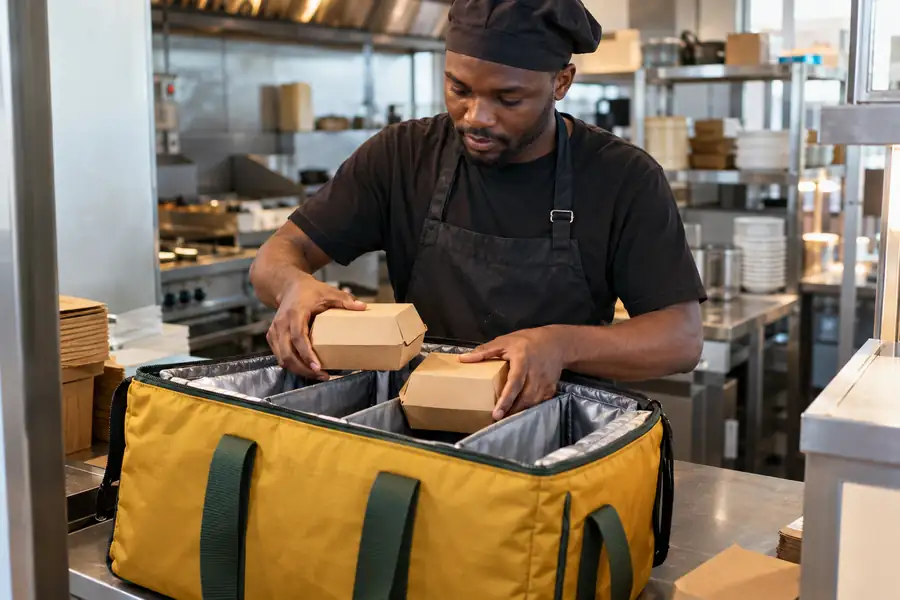
Send common package sizes, arrangements, quantities and the return model. Explain whether bags stay with drivers or are exchanged with customers. Include asset identifiers needed for recovery.
A complete enquiry should distinguish mandatory requirements from preferences. State the intended bag category, actual package measurements, quantity by variation, artwork and destination. Include any date that affects the purchasing decision, but ask the supplier to confirm feasibility in its proposal. Sampling, production timing, delivery arrangements and commercial terms are agreed for the specific order. There is no universal minimum quantity or turnaround promised on this page. Keeping the brief consistent also helps the buyer compare revised proposals without losing track of which details changed between versions.
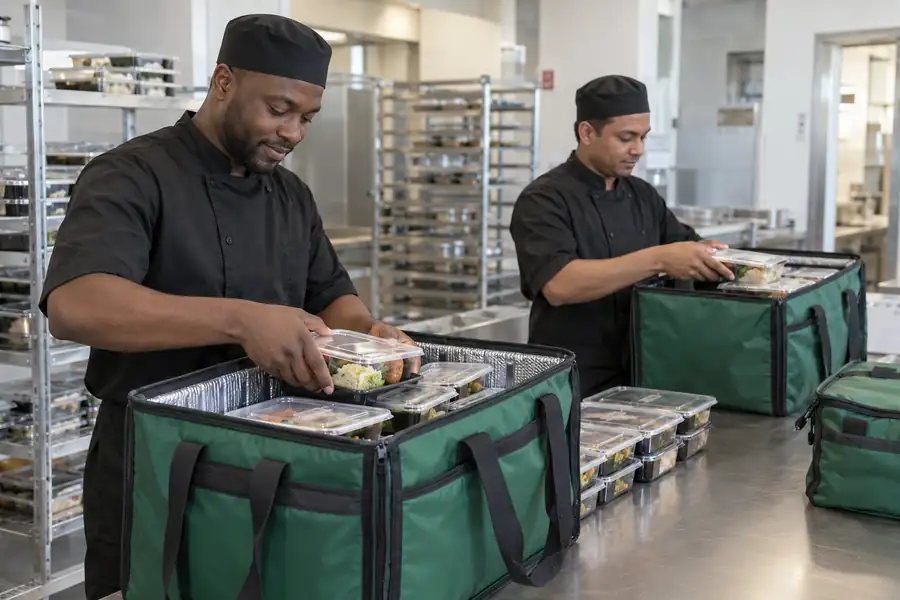
An operational example to discuss
A service that retains carriers with drivers needs a different quantity plan from a customer bag-exchange scheme. Decide ownership before finalising branding and identifiers. The most attractive bag can still be commercially awkward if nobody knows how it will return after delivery.
For grocery delivery businesses, the example is a starting point for discussion rather than a fixed specification. Compare it with your own packaged chilled groceries and protected produce. The most useful decision is the one that improves mixed grocery loads and carrier ownership in the actual operation. Bring that comparison to the sample review and identify any requirement that differs. This keeps the design conversation grounded in the work the bag must perform, instead of allowing an attractive colour or a familiar catalogue shape to determine the whole purchase.
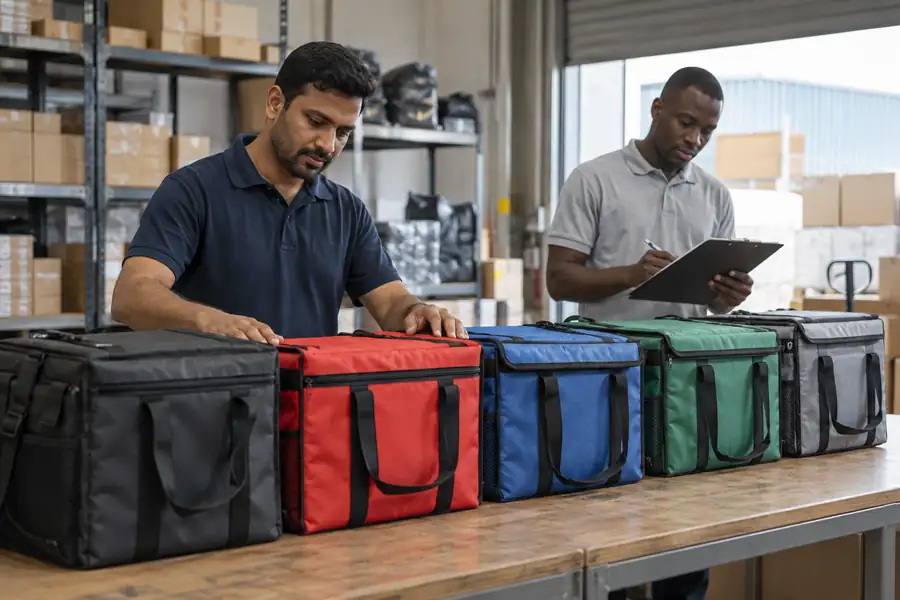
Decide what remains in the carrier at the doorstep
Grocery businesses should define the handover before deciding the bag quantity. Some drivers retain the insulated carrier and remove the customer’s packaged goods. Other programmes exchange or leave a returnable bag. The first model places more emphasis on quick removal and driver handling; the second also needs clear ownership, recovery and customer instructions. These decisions affect useful pocket positions and asset labels as well as the number of carriers in circulation.
Consider the most awkward realistic grocery combination during sampling. An upright bottle, a wide chilled pack and a delicate produce carton may fit individually but compete for support when carried together. The retailer should establish an arrangement that respects the goods and its handling procedure. Do not solve a poor fit by compressing fragile packaging or adding unrelated non-food products into spare space. Where customers retain bags temporarily, decide how returned carriers will be separated from ready stock and who checks them before reuse. The design should support this process without pretending that a colour or printed slogan establishes cleanliness. A documented ownership and return model makes the cooler bag a manageable business asset rather than an item that disappears after the first delivery.
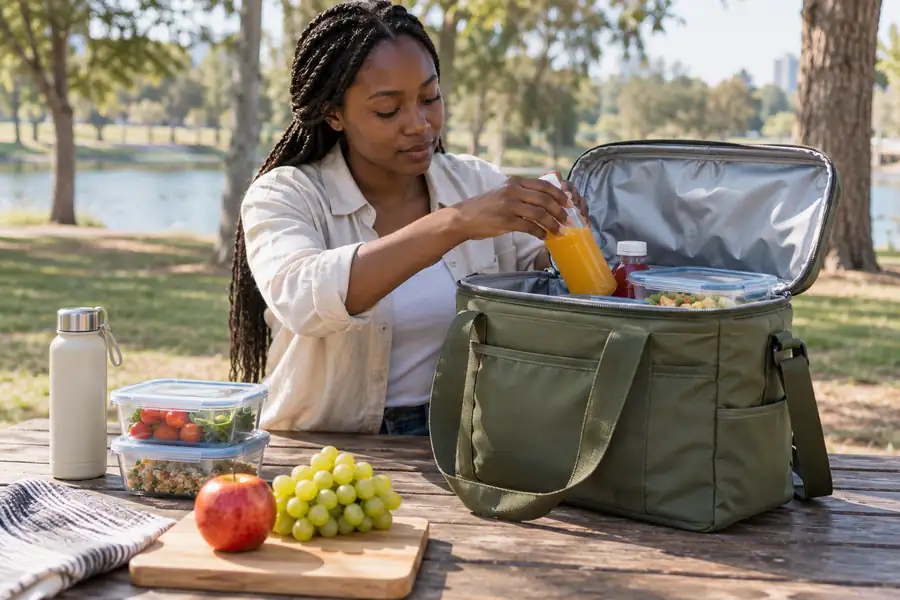
Is a cooler bag a substitute for refrigerated transport?
No. It provides passive insulation within an appropriate transport plan. The operator must assess product requirements, route and handling conditions rather than assuming the bag alone guarantees a particular temperature.
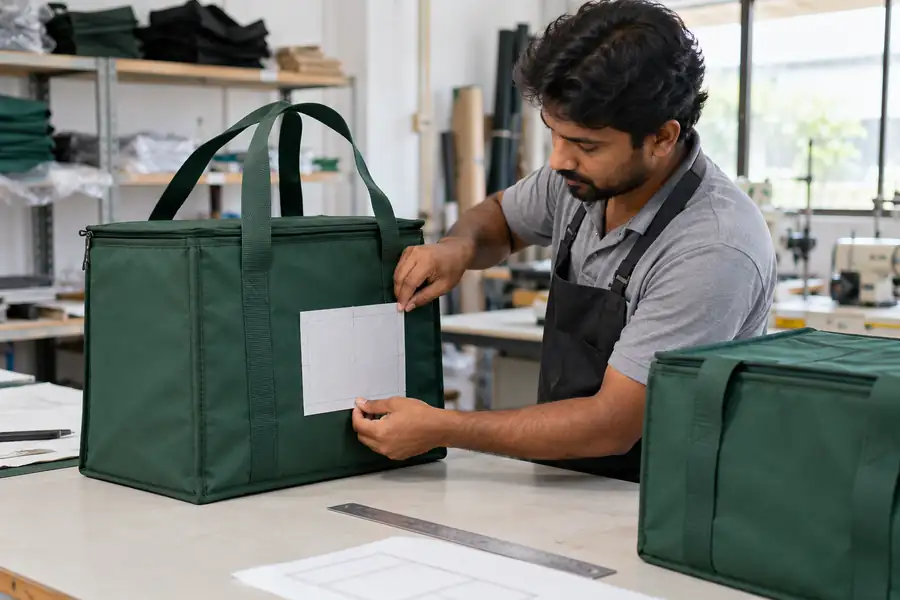
Supply from Sharjah across the UAE
ThermalBags.ae is part of Orient Uniforms FZE. Our office is at Block C VL01-080, Sharjah Research, Technology and Innovation Park, Sharjah, UAE. We handle business enquiries for supply and delivery from Sharjah to Dubai, Abu Dhabi, Ajman, Al Ain, Ras Al Khaimah, Fujairah and Umm Al Quwain, as well as Sharjah. Delivery arrangements are discussed for the order; these service destinations do not imply separate local offices. Tell us where the bags are required and whether the order needs one receiving point or several allocations.
To discuss grocery delivery cooler bags UAE, call or WhatsApp +971 50 599 2087 or email sales@orientuniforms.ae. Include your company, intended use, quantity and package dimensions. You can also identify a catalogue product as a visual starting point. For this application, a useful direction is a reusable cooler with a supportive floor, with fabric and colours reviewed against your brief. The catalogue covers cooler bags, food delivery bags, rider bags, pizza delivery bags and burger delivery bags. Prices and construction details are confirmed through a business quotation rather than online checkout.
Further reading and reference sources
| Decision | Information to send |
|---|---|
| Bag format | Cooler, food delivery, rider, pizza or burger bag; selected SKU if available. |
| Usable size | Closed packaging dimensions, quantities per bag and packed weight. |
| Material & colour | Fabric family, shade reference, contrasting or matching webbing. |
| Branding | Artwork, print location, colours and branch-specific identification. |
| Supply from Sharjah | Bulk quantity, UAE destination, receiving details and required date. |