
Hospital Meal Delivery Bags for UAE Catering Teams
Hospital meal transport must be distinguished from medical transport. This guide concerns packaged meals, catering transfers and staff food only, not medicines or clinical specimens. ThermalBags.ae supplies custom food delivery bags from Sharjah to UAE organisations. A hospital catering brief should be reviewed by the facility team responsible for food service, with dimensions, identification and cleaning compatibility matched to its established procedures.
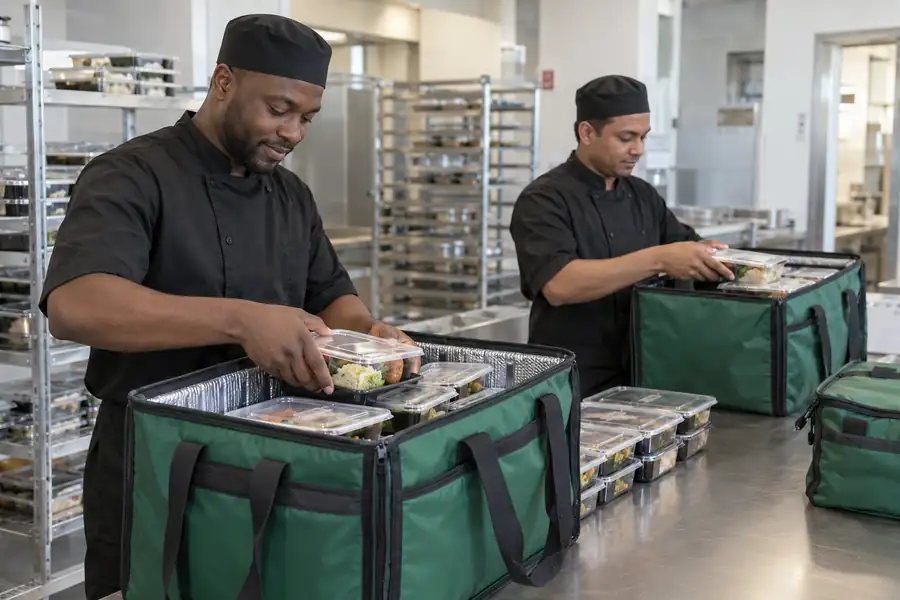
Plan the service and handover
Start with the approved catering route and responsible person at each transfer. Record collection and receipt stages. External bag labels should identify the food-service function without exposing patient names or confidential information.
Keep the food-only task explicit at every handover. A carrier used by a catering department should not be reassigned casually to another hospital function because its insulation appears useful. Changes of purpose require the responsible facility review. Keep this decision in the written operating brief and identify the person who will confirm it during sampling. The proposed feature can then be judged against a real task rather than a general preference. When the service arrangement changes, review the affected part of the specification before extending the earlier approval. That gives purchasing and the people using the bags the same practical reference for the order.
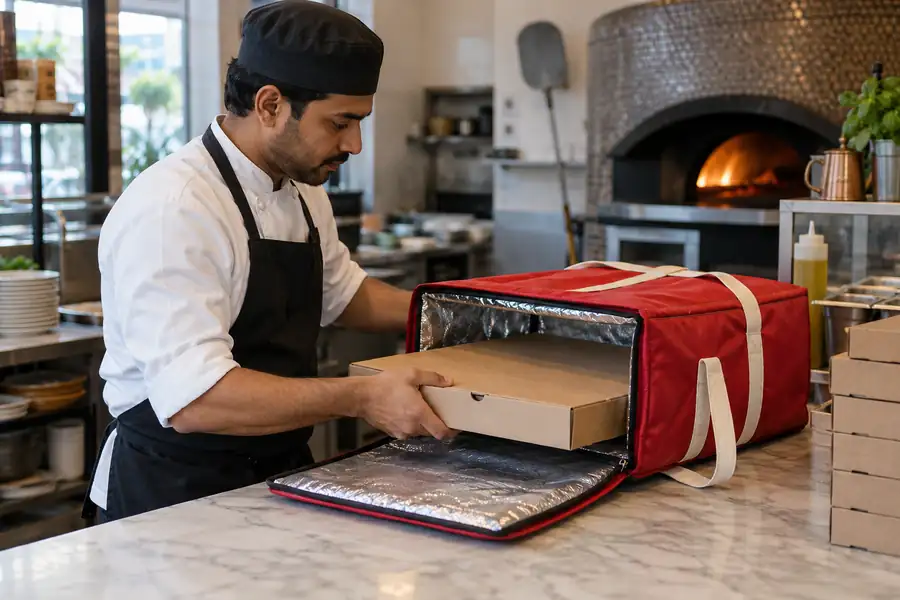
Specify useful dimensions and package clearance
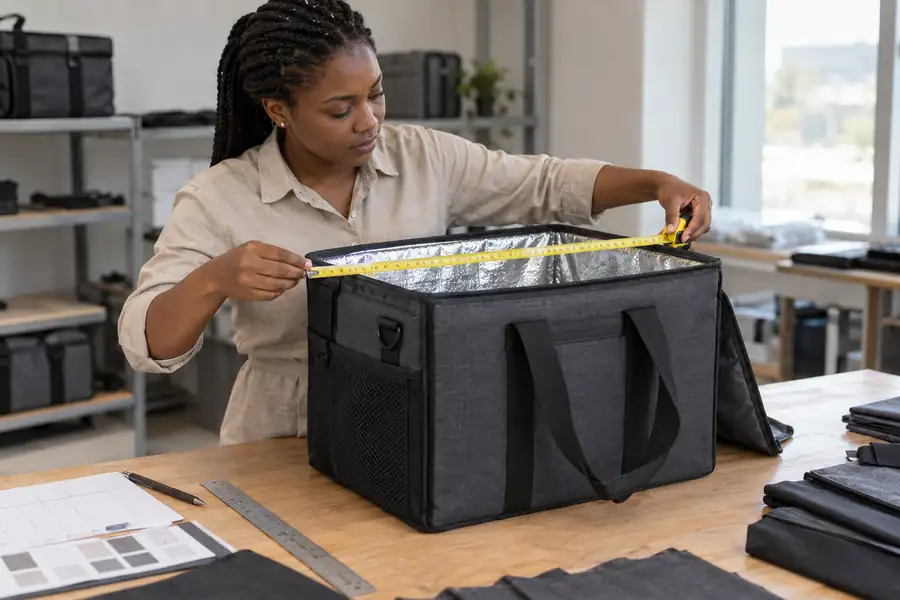
Measure sealed meal packs and secondary trays used by the catering department. Allow lifting clearance. A carrier for a small departmental transfer must not be assumed suitable for full ward service or an established trolley system.
Meal-pack labels may need to remain visible during checking. Arrange the stack so staff can follow the approved identification procedure without removing unrelated packs. Fit should support that procedure rather than create a second informal checking method. Record the measurement and the loading observation together, using centimetres and a clear distinction between package, internal space and external size. A photograph of the closed package arrangement can support the drawing. Retain the accepted reference for repeat orders, and revisit it whenever packaging changes. This prevents a familiar catalogue name from concealing a dimensional difference that matters to the people preparing or receiving the load.
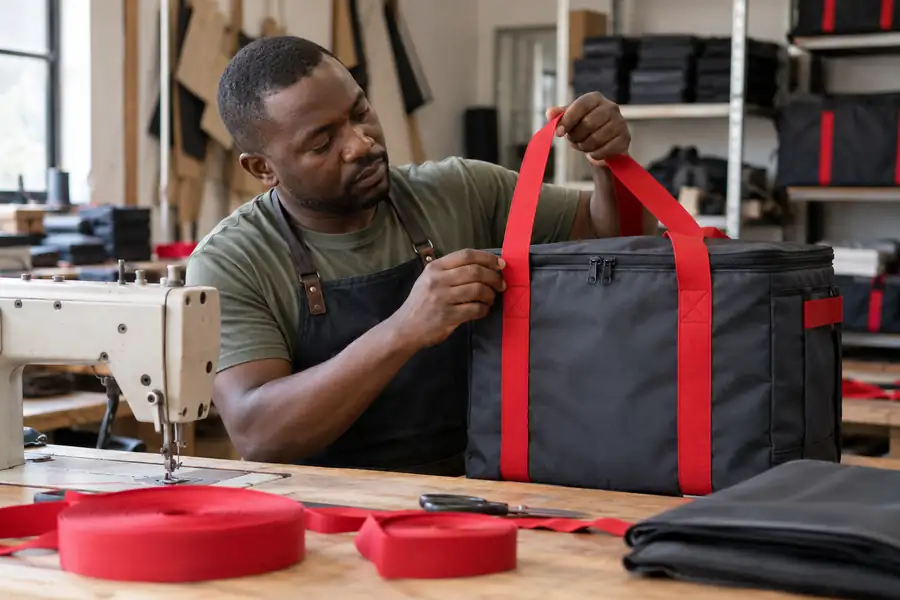
Choose handles and carrying details
The facility team should assess whether hand carrying suits the proposed load and permitted route. Control loose straps so they do not trail on floors or catch other equipment in a busy service area.
The receiving surface and route may be controlled by the institution. Check the proposed bag against those conditions and the staff handling it. Avoid introducing loose straps or oversized loads that conflict with the approved service arrangement. Include the observation in the sample review and ask the intended users to confirm the preferred method. If a change is needed, assess the revised arrangement with the same representative contents. Do not treat an empty-bag demonstration as approval of every filled load. Where the business requires a specific handling standard or documented rating, state that requirement separately so it can be reviewed explicitly before the order.
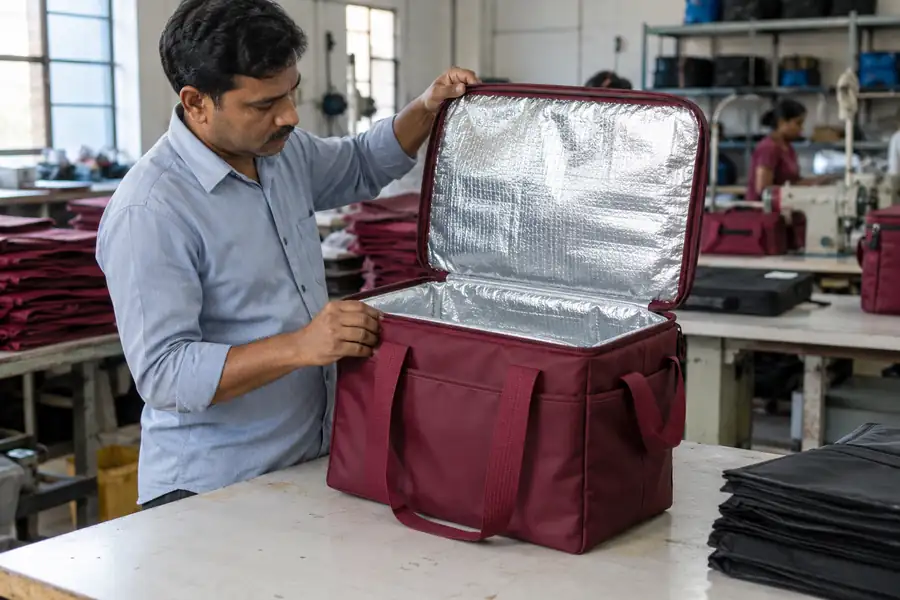
Review fabric, insulation and lining
Ask the facility to review liner and care instructions against its approved cleaning method. Any required food-contact documentation must concern the exact proposed material and use. Retain sealed primary food packaging.
Ask which material and care information the institution requires for its catering review. A general statement that a lining is silver or easy to wipe is not a substitute for the specific information requested by procurement. Put the relevant requirement into the enquiry so the proposed materials and construction can be reviewed against it. Ask for clarification where a description is incomplete, and retain any agreed material reference with the sample record. The business remains responsible for its operating and food-handling procedures. A useful quotation identifies the construction being offered without borrowing unverified performance claims from another product or a similar-looking reference photograph.
Approve colours, straps and printing
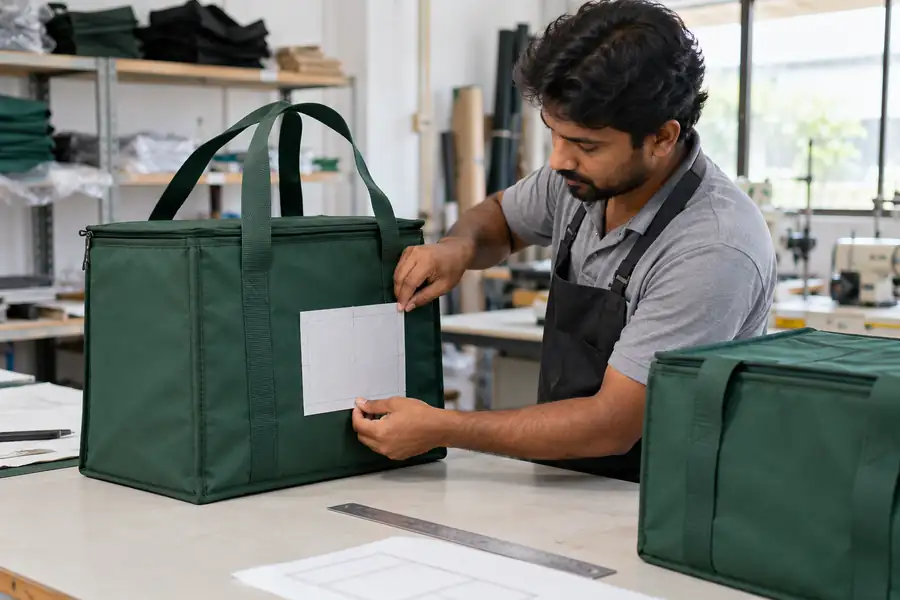
Use clear food-service identification and approved departmental codes. Colour supports recognition but does not replace meal checks. Avoid clinical symbols suggesting medical certification or infection-control functions that have not been established.
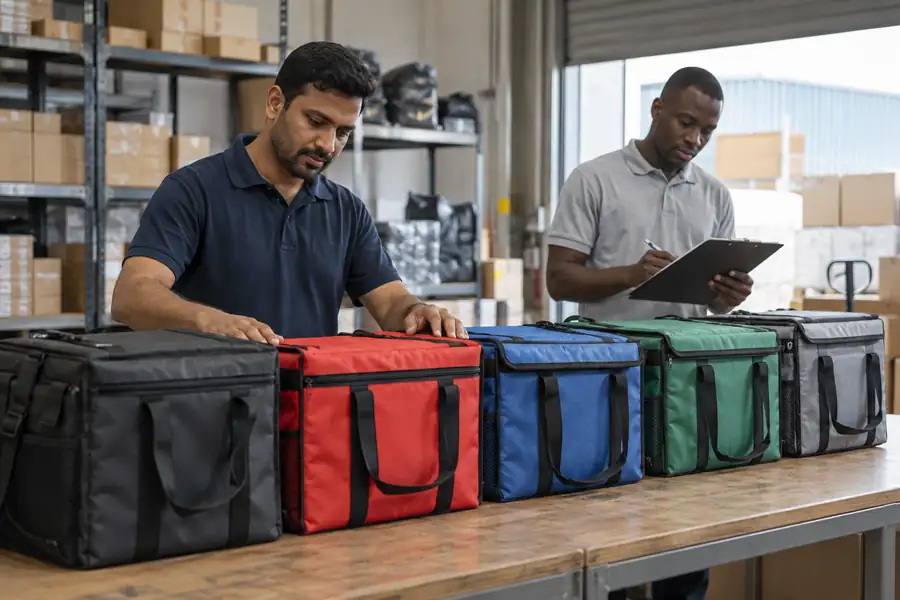
Department lettering should describe the catering use without suggesting a clinical qualification. Keep private meal information out of permanent artwork. Where colour coding is used, confirm its meaning with the institution rather than inventing a new system. Record the accepted position, colour reference and artwork revision for the particular bag configuration. Review the result on the selected material at its intended size. A screen mockup helps communicate layout but does not replace physical shade and print approval. If several variations are ordered, keep their quantities and identifiers distinct so the receiving team can compare the delivered bags with the approved visual reference.
Prepare a practical care and return routine
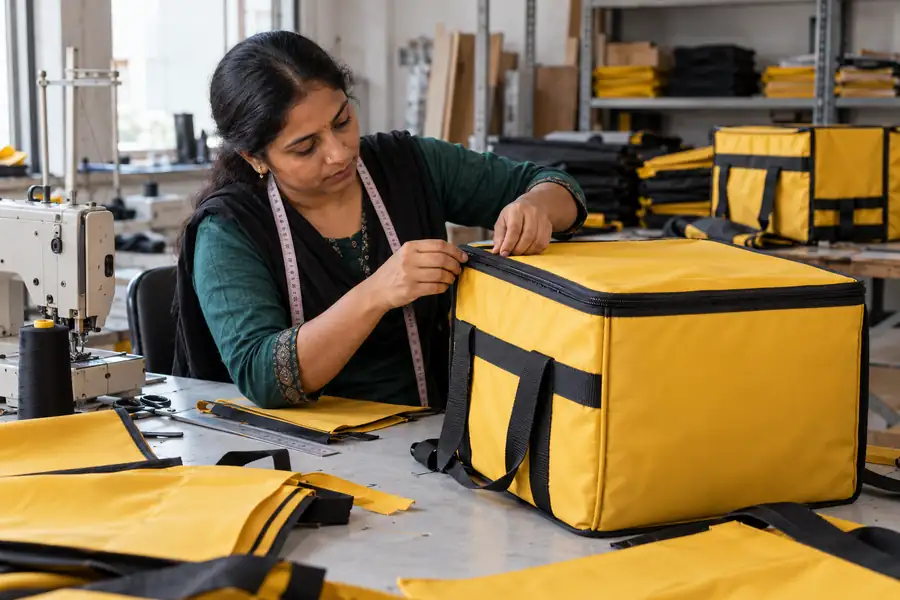
Define food-only returns and storage. Remove carriers with damaged liners, failed closures or unresolved contamination from service for assessment. The facility decides cleaning responsibilities and release criteria.
The facility should identify where used catering carriers are placed and who decides they are ready again. Do not merge that process with unrelated hospital equipment handling merely because both items move through the same building. Agree the responsibility and the material-appropriate care method before issuing the bags. Keep carriers awaiting attention separate from ready stock and make the inspection points understandable to the people using them. Record recurring wear so it can inform a later design review. A clear return process supports the investment in custom equipment and avoids repeated replacement without understanding whether the underlying issue concerns loading, handling, construction or storage.
Evaluate a representative sample
Conduct a supervised trial with representative meal packs and the approved route. Assess loading, identification, receipt and cleaning access. Temperature acceptance belongs to the facility food-safety procedure, not a general claim about foam thickness.
Use the institution’s own acceptance criteria for the sample. Record which checks concern physical fit and which require separate food-service approval. This prevents a successful carrying trial being described as comprehensive institutional approval. Record what was checked, the sample revision and any unresolved point. Ask both the loading and receiving users to comment where their responsibilities differ. A useful approval states its scope rather than implying that every possible application has been demonstrated. Keep the observations with the order reference so a revised size, material or operating method can be compared with the configuration that was actually assessed.

Build a clear UAE wholesale enquiry
Include meal-pack sizes, precise catering purpose, cleaning requirements, identifiers and quantities. State documentation required before sampling. Distinguish staff meals, satellite-kitchen transfers and other approved food-service tasks.
A complete enquiry should distinguish mandatory requirements from preferences. State the intended bag category, actual package measurements, quantity by variation, artwork and destination. Include any date that affects the purchasing decision, but ask the supplier to confirm feasibility in its proposal. Sampling, production timing, delivery arrangements and commercial terms are agreed for the specific order. There is no universal minimum quantity or turnaround promised on this page. Keeping the brief consistent also helps the buyer compare revised proposals without losing track of which details changed between versions.

An operational example to discuss
A hospital may need a small food-only carrier for meeting-room refreshments while patient meals continue through an established trolley system. These are different requirements. Evaluate the carrier for its own route without implying that it replaces a clinical catering system.
For hospital catering teams, the example is a starting point for discussion rather than a fixed specification. Compare it with your own sealed labelled catering meal packs. The most useful decision is the one that improves food-only scope and facility-approved handovers in the actual operation. Bring that comparison to the sample review and identify any requirement that differs. This keeps the design conversation grounded in the work the bag must perform, instead of allowing an attractive colour or a familiar catalogue shape to determine the whole purchase.
Write a precise catering-only procurement scope
A hospital purchase request should state the specific catering task in plain language. For example, a transfer of sealed staff meals to a designated dining point describes a narrower and clearer need than a general request for healthcare thermal bags. The facility can then identify the department that reviews packaging, handling and cleaning. This avoids a food carrier being interpreted as equipment for clinical materials. Keep clinical symbols and unsupported medical claims out of artwork and product descriptions.
The receiving procedure should also be defined by the institution. A bag label can support departmental routing, while the approved meal record controls the contents. The carrier should not expose patient information or encourage staff to improvise a new meal-identification system. If the proposed use later changes, return to the responsible facility team rather than assuming the earlier sample approval covers it. Procurement documents should distinguish required evidence from optional design preferences, including any liner information or care compatibility that must be reviewed. Ask for those points to be resolved before the order is confirmed. This makes the bag specification traceable and keeps the commercial conversation focused on food service. It also gives the supplier a clear basis for explaining what the proposed construction does and does not include.
Are these bags suitable for medicines or specimens?
This page covers packaged meals and catering only. Clinical or pharmaceutical transport requires separately qualified products and procedures outside this food-bag catalogue. Identify the catering use clearly in the enquiry.
Supply from Sharjah across the UAE
ThermalBags.ae is part of Orient Uniforms FZE. Our office is at Block C VL01-080, Sharjah Research, Technology and Innovation Park, Sharjah, UAE. We handle business enquiries for supply and delivery from Sharjah to Dubai, Abu Dhabi, Ajman, Al Ain, Ras Al Khaimah, Fujairah and Umm Al Quwain, as well as Sharjah. Delivery arrangements are discussed for the order; these service destinations do not imply separate local offices. Tell us where the bags are required and whether the order needs one receiving point or several allocations.
To discuss hospital meal delivery bags UAE, call or WhatsApp +971 50 599 2087 or email sales@orientuniforms.ae. Include your company, intended use, quantity and package dimensions. You can also identify a catalogue product as a visual starting point. For this application, a useful direction is a clearly identified food-only insulated carrier, with fabric and colours reviewed against your brief. The catalogue covers cooler bags, food delivery bags, rider bags, pizza delivery bags and burger delivery bags. Prices and construction details are confirmed through a business quotation rather than online checkout.
Further reading and reference sources
| Decision | Information to send |
|---|---|
| Bag format | Cooler, food delivery, rider, pizza or burger bag; selected SKU if available. |
| Usable size | Closed packaging dimensions, quantities per bag and packed weight. |
| Material & colour | Fabric family, shade reference, contrasting or matching webbing. |
| Branding | Artwork, print location, colours and branch-specific identification. |
| Supply from Sharjah | Bulk quantity, UAE destination, receiving details and required date. |