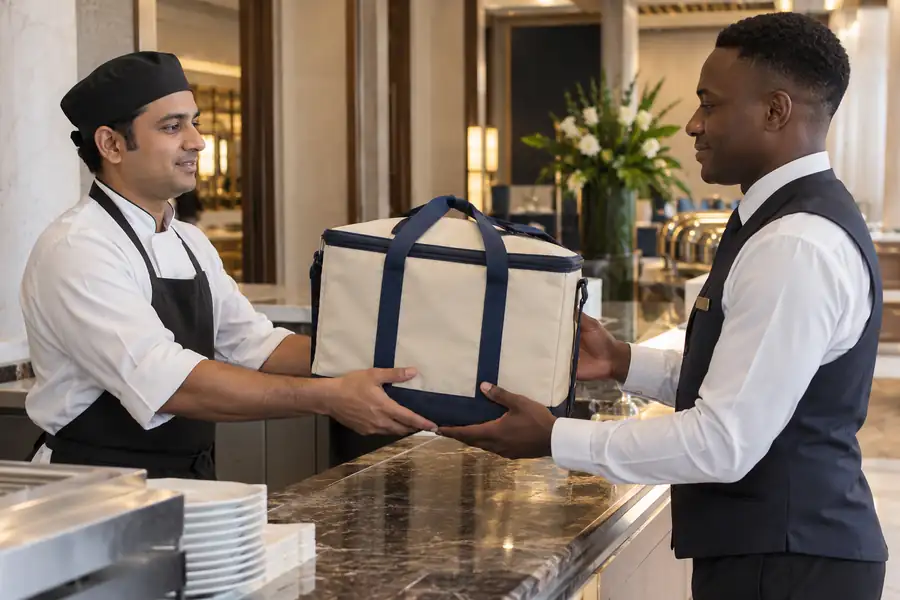
Thermal Food Delivery Bags for UAE Hotels
Hotel food transport includes kitchen-to-reception breakfast boxes, departmental staff meals and small functions away from the main service area. These journeys need different handling and presentation choices. ThermalBags.ae supplies custom insulated bags from Sharjah to UAE hotel buyers. A restrained visual identity can be combined with practical loading and a construction selected for the intended packaged-food service.
Plan the service and handover
Map the transfer between kitchen, service corridor and receiving point. A convenient loading-bench bag may be less convenient at concierge. Specify who accepts it, where it waits and whether it returns immediately or after service.
Breakfast departures, staff catering and event transfers can have different receiving teams. Identify the actual department for each carrier. This prevents an attractive guest-facing bag being selected for a larger back-of-house load it was never intended to carry. Keep this decision in the written operating brief and identify the person who will confirm it during sampling. The proposed feature can then be judged against a real task rather than a general preference. When the service arrangement changes, review the affected part of the specification before extending the earlier approval. That gives purchasing and the people using the bags the same practical reference for the order.
Specify useful dimensions and package clearance
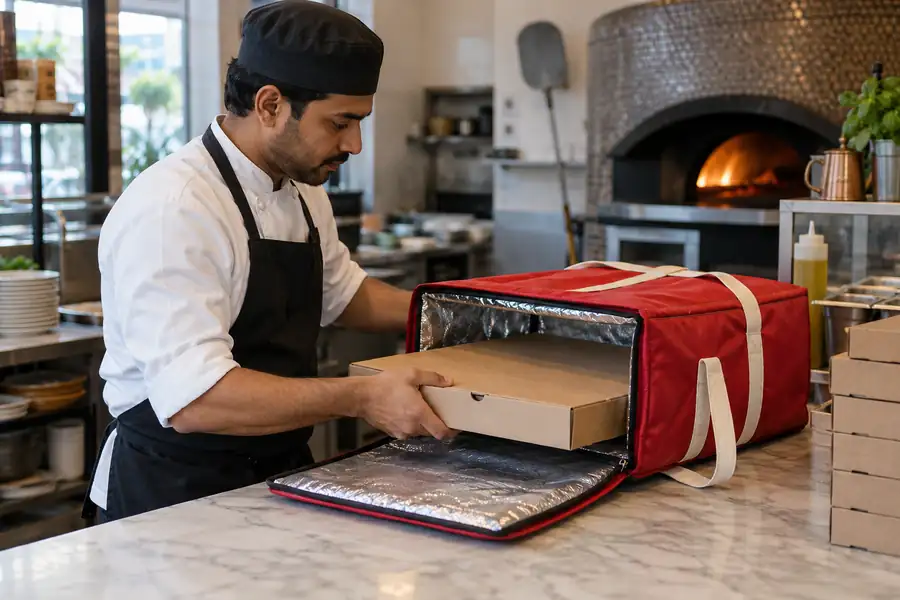
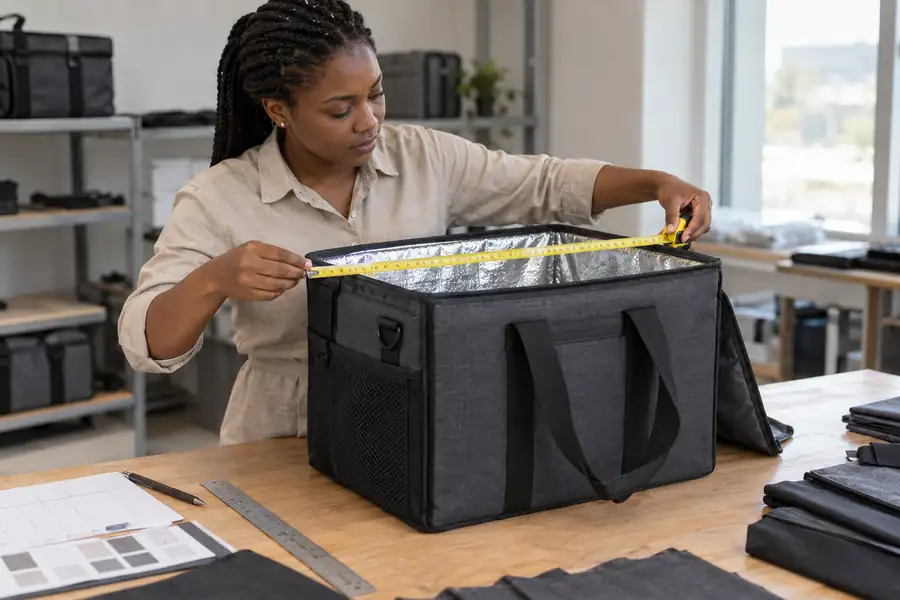
Measure the finished breakfast-box arrangement, including upright drinks and fruit packs where applicable. If the bag travels on an existing trolley, check usable shelf space and handle clearance rather than adding individual item volumes.
A hotel trolley shelf may constrain outside width even when internal capacity is sufficient. Measure the shelf edge and removal clearance, then assess the loaded bag rather than assuming the nominal shelf dimension is fully usable. Record the measurement and the loading observation together, using centimetres and a clear distinction between package, internal space and external size. A photograph of the closed package arrangement can support the drawing. Retain the accepted reference for repeat orders, and revisit it whenever packaging changes. This prevents a familiar catalogue name from concealing a dimensional difference that matters to the people preparing or receiving the load.
Choose handles and carrying details
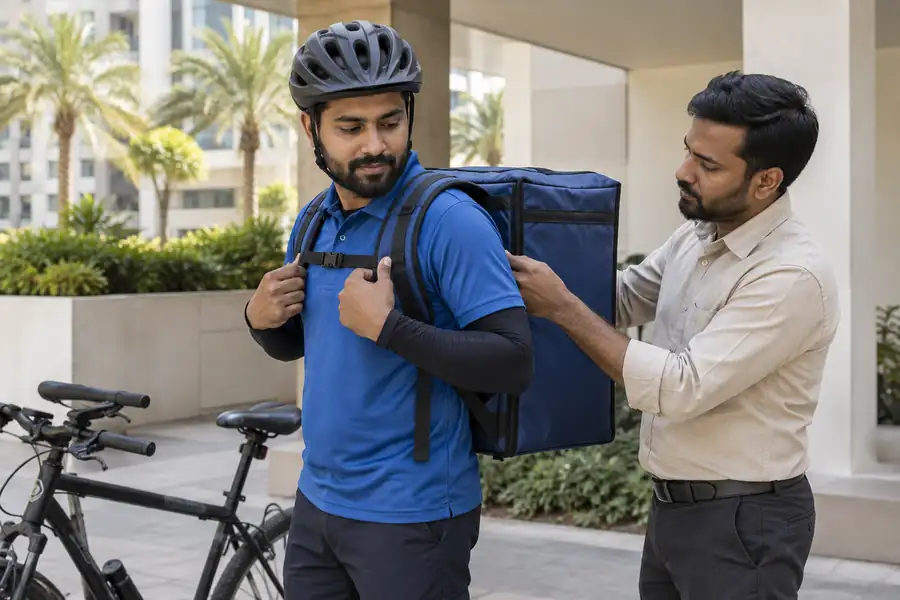
Short handles may suit a reception handover, while balanced side handles can help with a larger service load. Choose an opening that does not sweep loose straps across neighbouring packaging when staff work at a narrow counter.
Check whether a staff member must carry the bag while opening a service door. The handle arrangement should suit the approved route, and the operating method should not rely on balancing a loaded carrier against a wall. Include the observation in the sample review and ask the intended users to confirm the preferred method. If a change is needed, assess the revised arrangement with the same representative contents. Do not treat an empty-bag demonstration as approval of every filled load. Where the business requires a specific handling standard or documented rating, state that requirement separately so it can be reviewed explicitly before the order.
Review fabric, insulation and lining
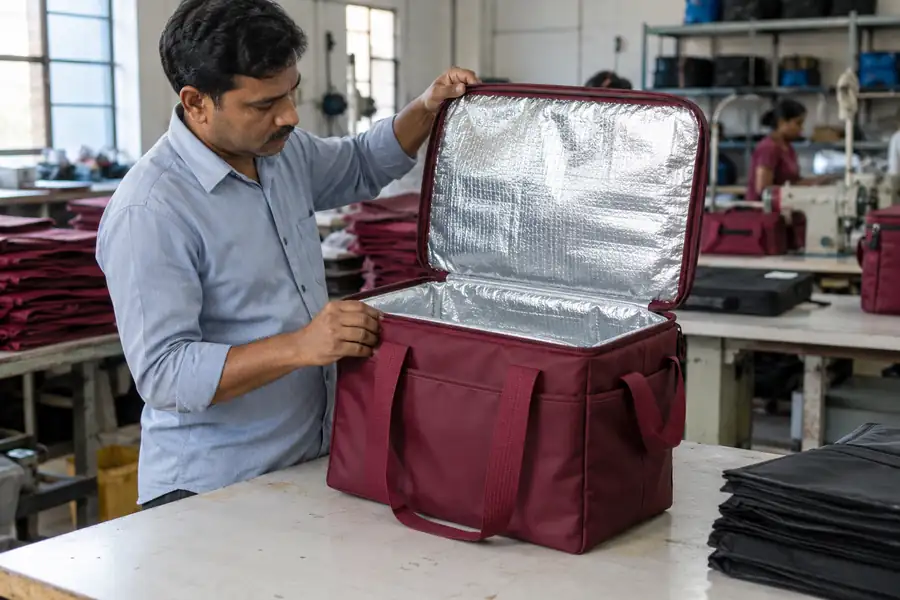
The inside finish should support the hotel cleaning routine as well as external presentation. Discuss access to joins and removable components where appropriate. Separate wet cleaning from clean storage so the next service begins with a dry carrier.
Guest-facing presentation does not remove the need to inspect hidden seams and inner corners. Ask the housekeeping or food-service team responsible for the bag to review the proposed cleaning access before a decorative finish is accepted. Put the relevant requirement into the enquiry so the proposed materials and construction can be reviewed against it. Ask for clarification where a description is incomplete, and retain any agreed material reference with the sample record. The business remains responsible for its operating and food-handling procedures. A useful quotation identifies the construction being offered without borrowing unverified performance claims from another product or a similar-looking reference photograph.

Approve colours, straps and printing
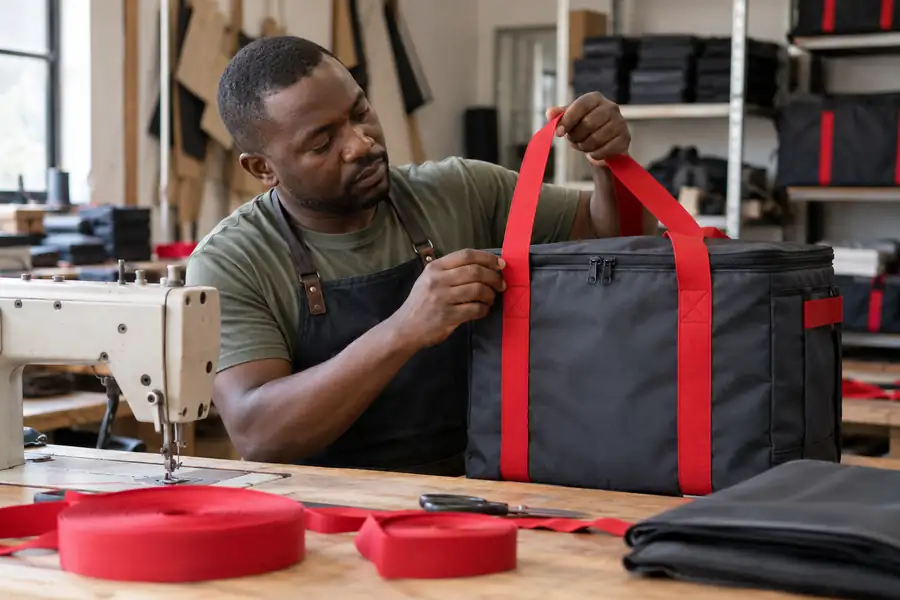
A subtle hotel mark, tonal stitching and contrasting handles can look considered while retaining easy identification. Approve the logo on the actual panel. A fleet-sized print may look excessive in a guest-facing space.
A property group may share one logo but require separate department identifiers. Keep those elements distinct so a change of department does not require replacing the main brand artwork or obscuring it with an improvised label. Record the accepted position, colour reference and artwork revision for the particular bag configuration. Review the result on the selected material at its intended size. A screen mockup helps communicate layout but does not replace physical shade and print approval. If several variations are ordered, keep their quantities and identifiers distinct so the receiving team can compare the delivered bags with the approved visual reference.
Prepare a practical care and return routine
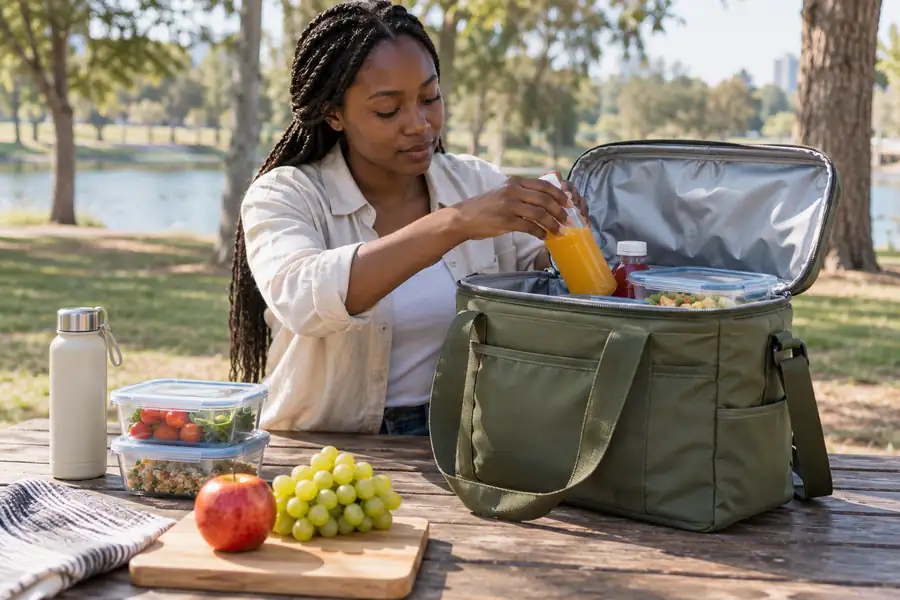
Assign bags by department or service and keep a return record. Check the base after trolley use and the handles after repeated transfers. Review guest-facing carriers for visible wear as well as functional damage.
When bags move between kitchen and reception, ownership of the return check can become unclear. Assign that responsibility in the service brief and identify the storage point used after the carrier is cleaned and ready. Agree the responsibility and the material-appropriate care method before issuing the bags. Keep carriers awaiting attention separate from ready stock and make the inspection points understandable to the people using them. Record recurring wear so it can inform a later design review. A clear return process supports the investment in custom equipment and avoids repeated replacement without understanding whether the underlying issue concerns loading, handling, construction or storage.
Evaluate a representative sample
Walk the proposed service route with the packed sample. Check doorway clearance, trolley placement, opening direction and receiving surfaces. Include reception or event-desk handover rather than testing only at a kitchen worktop.
Review the sample during the actual service setup, including the receiving counter and trolley. A bag that looks proportionate in a showroom may occupy too much working space beside breakfast boxes and guest paperwork. Record what was checked, the sample revision and any unresolved point. Ask both the loading and receiving users to comment where their responsibilities differ. A useful approval states its scope rather than implying that every possible application has been demonstrated. Keep the observations with the order reference so a revised size, material or operating method can be compared with the configuration that was actually assessed.
Build a clear UAE wholesale enquiry
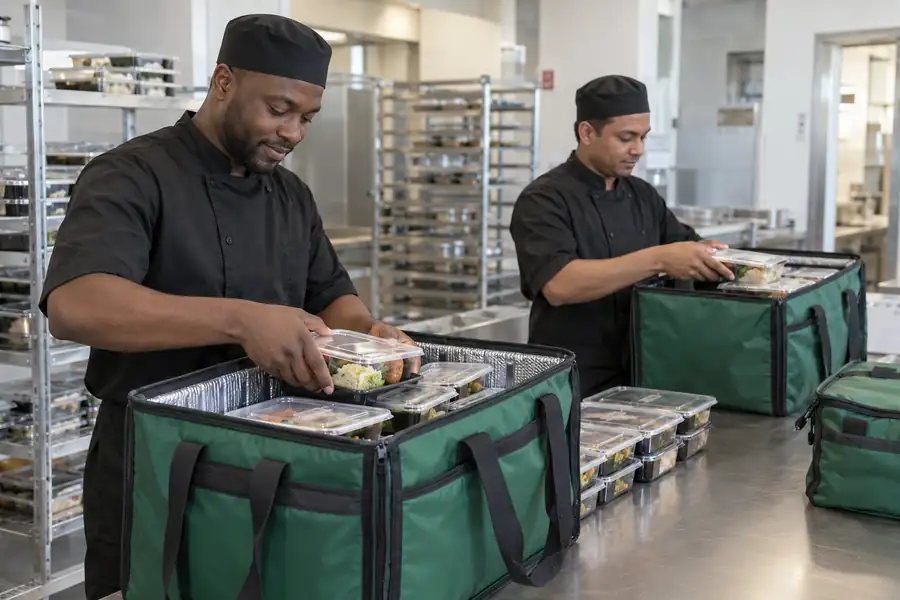
Send meal-box sizes, service departments, preferred finish and permanent or replaceable identifier requirements. List quantities by property and size. Explain whether bags remain with staff or are given to guests.
Prepare one reference pack containing the loading brief, measurements, selected design direction, artwork and quantities. This makes the conversation easier for purchasing and operations to follow. Identify where you need advice and where a requirement is fixed. Ask the quotation to confirm its scope, sample arrangements and proposed delivery plan. A clear written proposal is the basis for the order; general catalogue descriptions are a starting point for discussion. Keep the accepted version available so subsequent reorders can refer to it without reconstructing decisions from old messages.
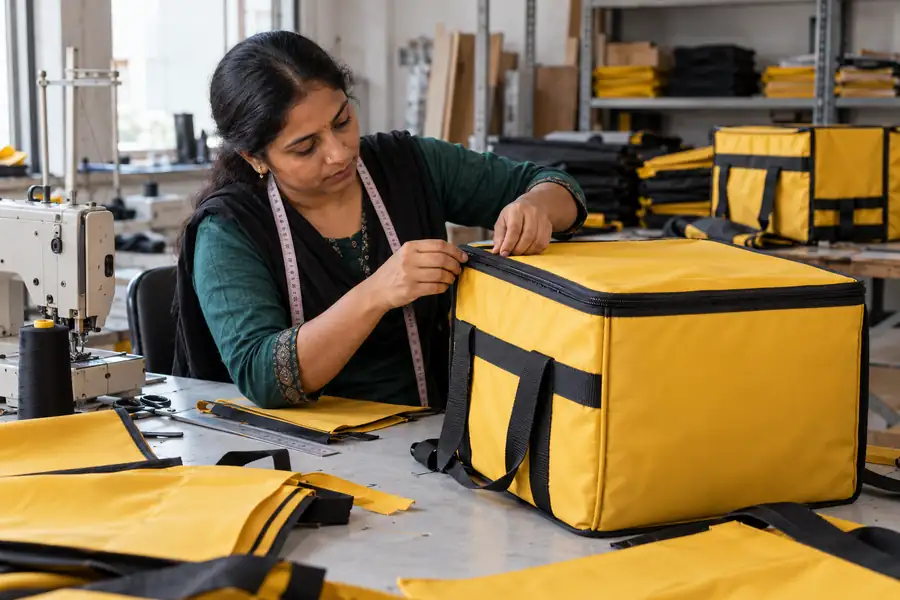
An operational example to discuss
An early-departure breakfast service may use a modest carrier for movement to reception and another format for group transfers. This is different from designing a restaurant rider bag. Matching the receiving area and return process matters more than choosing the largest available carrier.
For hotel food and beverage teams, the example is a starting point for discussion rather than a fixed specification. Compare it with your own covered breakfast boxes and sealed guest meals. The most useful decision is the one that improves service presentation and departmental accountability in the actual operation. Bring that comparison to the sample review and identify any requirement that differs. This keeps the design conversation grounded in the work the bag must perform, instead of allowing an attractive colour or a familiar catalogue shape to determine the whole purchase.
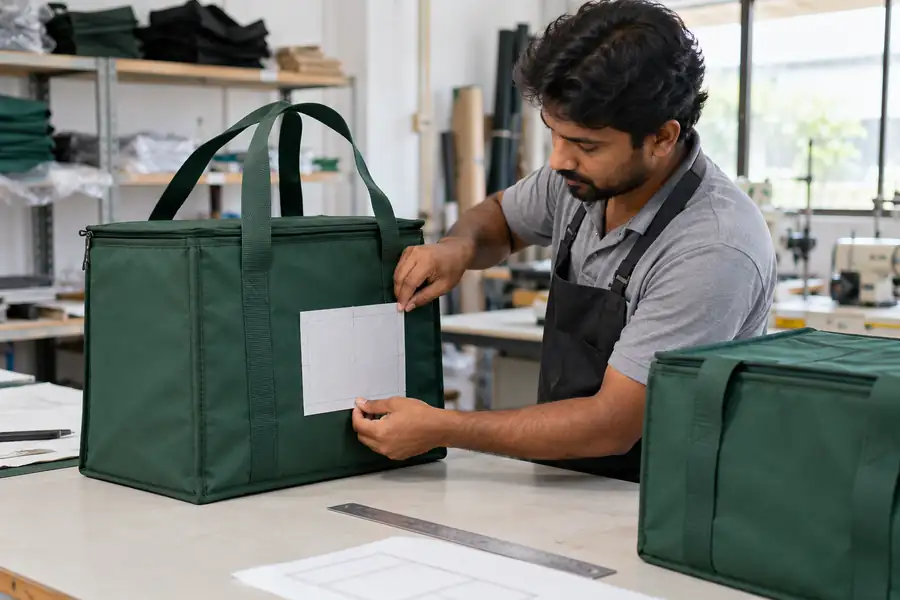
Separate guest-facing and service-area priorities
Hotel departments do not always need the same appearance or access arrangement. A carrier visible at reception may benefit from discreet branding and a tidy strap arrangement, while a back-of-house transfer may prioritise a larger identifier. The purchasing team can retain one coordinated colour scheme without insisting that both jobs use an identical size. Ask each department to describe where the bag is placed when full, how it is opened and where it waits empty. Those details make the sample review specific.
For a multi-property order, record the common requirements and the property-specific variations separately. Shared artwork may be straightforward, but breakfast packaging or receiving counters may differ. A standard bag should be approved against those differences rather than imposed without a fit check. Where an identifier needs to change frequently, discuss a practical label area instead of permanently printing every service detail. Keep the visual presentation appropriate to the setting, but do not let decorative trim interfere with cleaning or the closure. Before issuing the final order, ensure the staff responsible for returning and storing the carriers understand the proposed process. The bag becomes useful when it fits the hotel service routine as well as the brand.
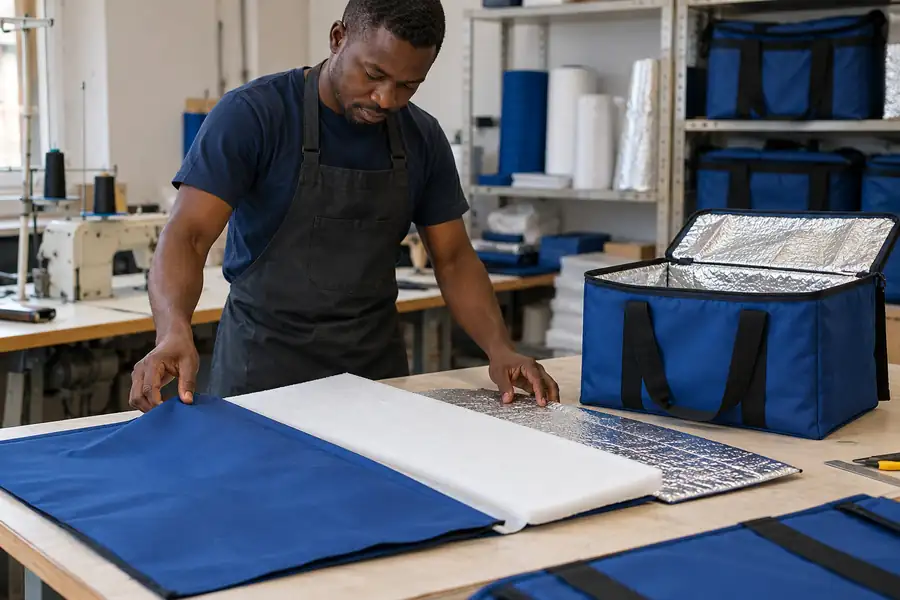
Can hotel bags use discreet branding?
Yes. Request a restrained logo, tonal colour combination or small departmental identifier. Review the print on the chosen fabric and confirm that staff can still recognise the correct service bag quickly.
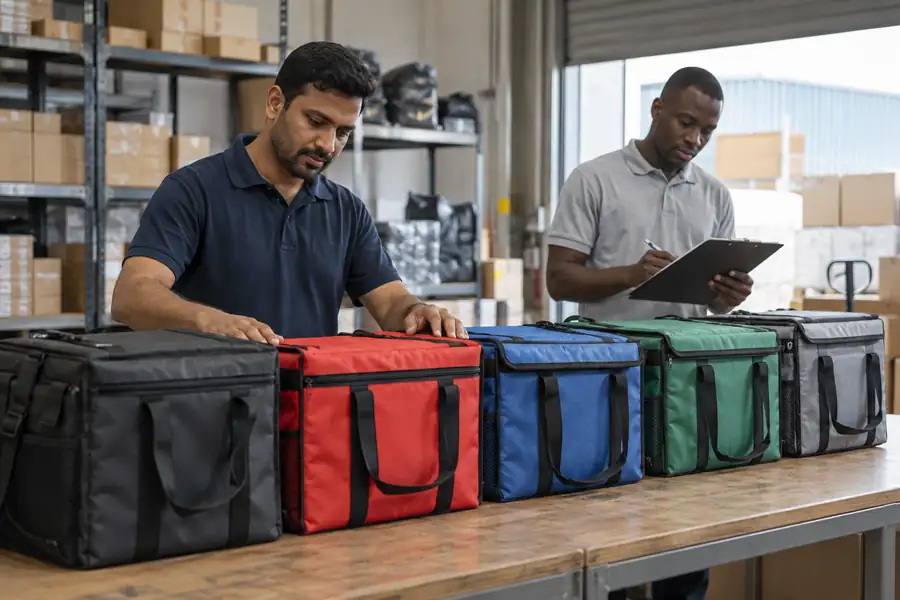
Supply from Sharjah across the UAE
ThermalBags.ae is part of Orient Uniforms FZE. Our office is at Block C VL01-080, Sharjah Research, Technology and Innovation Park, Sharjah, UAE. We handle business enquiries for supply and delivery from Sharjah to Dubai, Abu Dhabi, Ajman, Al Ain, Ras Al Khaimah, Fujairah and Umm Al Quwain, as well as Sharjah. Delivery arrangements are discussed for the order; these service destinations do not imply separate local offices. Tell us where the bags are required and whether the order needs one receiving point or several allocations.
To discuss hotel thermal food delivery bags UAE, call or WhatsApp +971 50 599 2087 or email sales@orientuniforms.ae. Include your company, intended use, quantity and package dimensions. You can also identify a catalogue product as a visual starting point. For this application, a useful direction is a discreet hand-carry thermal bag, with fabric and colours reviewed against your brief. The catalogue covers cooler bags, food delivery bags, rider bags, pizza delivery bags and burger delivery bags. Prices and construction details are confirmed through a business quotation rather than online checkout.
Further reading and reference sources
| Decision | Information to send |
|---|---|
| Bag format | Cooler, food delivery, rider, pizza or burger bag; selected SKU if available. |
| Usable size | Closed packaging dimensions, quantities per bag and packed weight. |
| Material & colour | Fabric family, shade reference, contrasting or matching webbing. |
| Branding | Artwork, print location, colours and branch-specific identification. |
| Supply from Sharjah | Bulk quantity, UAE destination, receiving details and required date. |