
Large Capacity Catering Bags for UAE Food Businesses
Large capacity is only useful when the packed carrier can be loaded, lifted and unloaded sensibly. A bigger bag is not automatically a better catering solution. ThermalBags.ae supplies custom thermal bags from Sharjah for UAE businesses. This guide addresses the dimensional and handling decisions behind larger carriers, including tray footprints, opening clearance, base support and manageable load planning. It complements event planning by focusing on the physical bag and its relationship to the packed food.

Plan the service and handover
Define the largest normal load and the people moving it. Identify each lifting stage from kitchen to vehicle and receiving surface. If a trolley is part of the operation, assess the bag against that specific equipment.
Large-load planning should identify every lift between kitchen and receiving point. A trolley transfer and a hand carry are different actions. The bag specification should reflect the intended method rather than assume volume determines the handling solution. Keep this decision in the written operating brief and identify the person who will confirm it during sampling. The proposed feature can then be judged against a real task rather than a general preference. When the service arrangement changes, review the affected part of the specification before extending the earlier approval. That gives purchasing and the people using the bags the same practical reference for the order.
Specify useful dimensions and package clearance
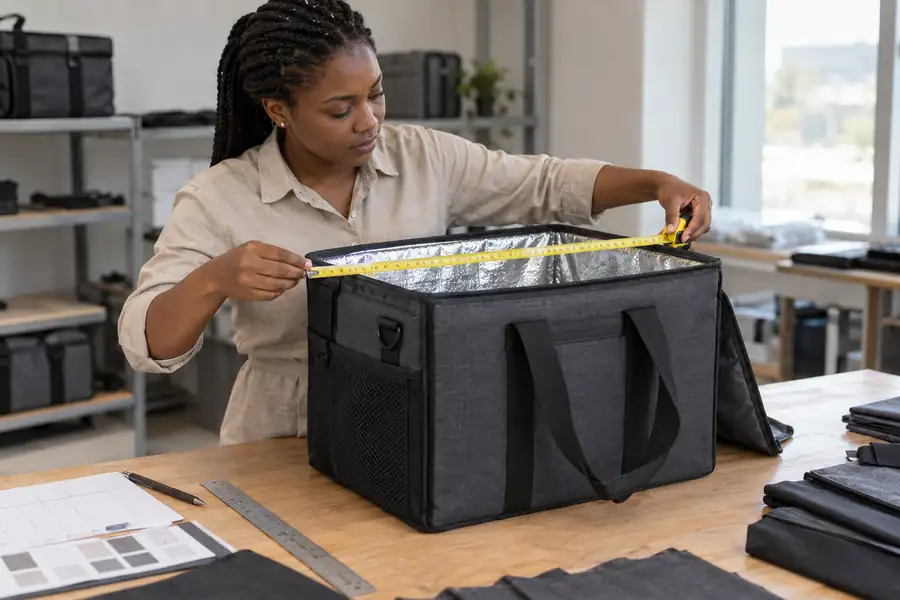
Measure covered trays at the widest rim and include stack height. Internal floor dimensions and opening dimensions are separate checks. Allow practical lifting clearance without creating unnecessary loose space around the tray stack.
Measure tray rims and opening clearance separately from the floor. Check the lowest tray’s removal path. A large internal footprint is not sufficient if the proposed stack can enter only by tilting or compressing packaging. Record the measurement and the loading observation together, using centimetres and a clear distinction between package, internal space and external size. A photograph of the closed package arrangement can support the drawing. Retain the accepted reference for repeat orders, and revisit it whenever packaging changes. This prevents a familiar catalogue name from concealing a dimensional difference that matters to the people preparing or receiving the load.
Choose handles and carrying details
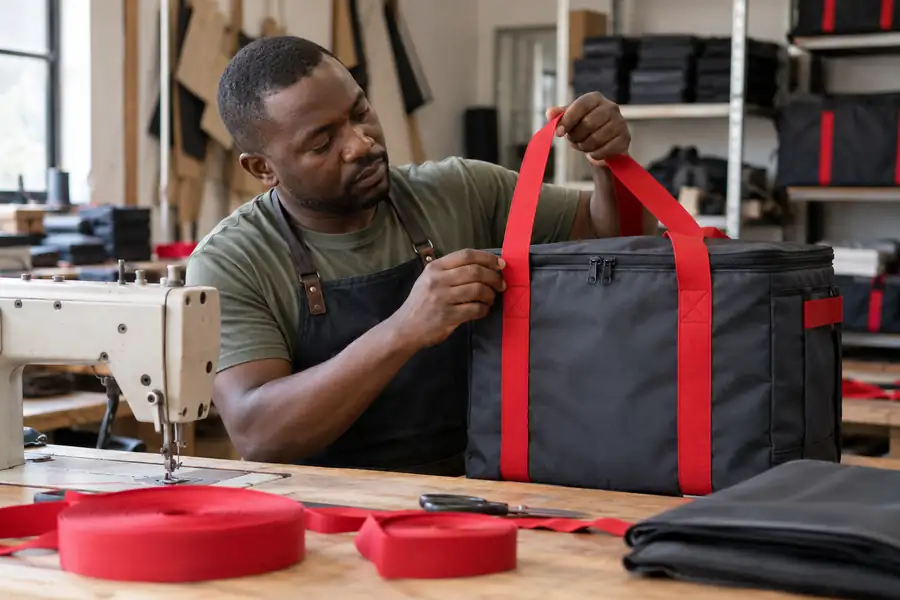
Discuss two-person lifting, side handles and base support where appropriate. Do not infer a safe load rating from the number of straps in an image. The proposed construction must be assessed against the intended filled configuration.
Compare one large carrier with two manageable alternatives using representative weight. Record the operational trade-off rather than assuming fewer bags means less work. Any required load rating must be established explicitly, not inferred from visible reinforcement. Include the observation in the sample review and ask the intended users to confirm the preferred method. If a change is needed, assess the revised arrangement with the same representative contents. Do not treat an empty-bag demonstration as approval of every filled load. Where the business requires a specific handling standard or documented rating, state that requirement separately so it can be reviewed explicitly before the order.
Review fabric, insulation and lining
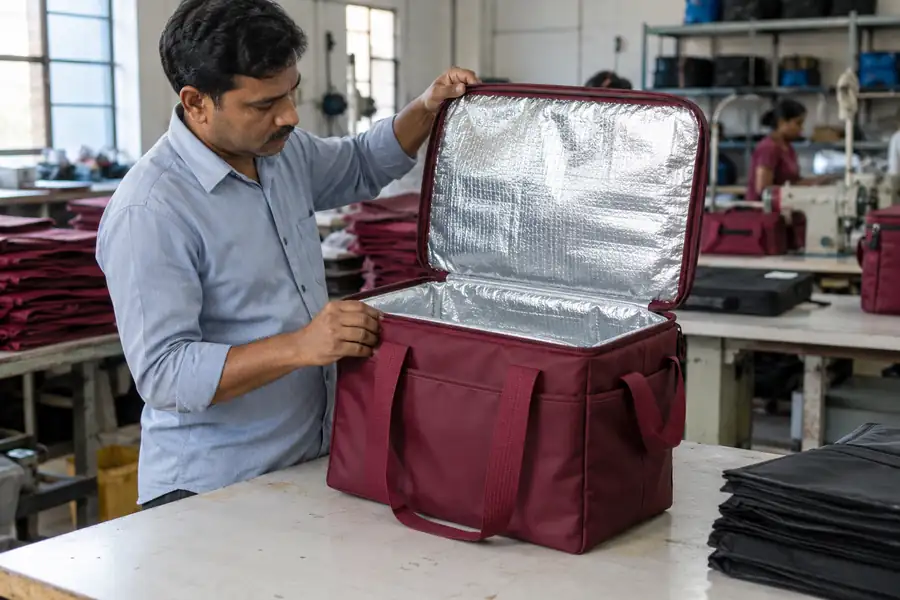
Large panels and corners need a coherent construction proposal. Insulation, support and lining affect usable space as well as weight. Confirm details in a sample and avoid assuming the interior can contain free liquids.
Support panels and insulation occupy space and may affect cleaning or storage. Identify their role in the proposed construction. Do not assume a large lined interior can safely contain free liquid because it resembles a rigid container. Put the relevant requirement into the enquiry so the proposed materials and construction can be reviewed against it. Ask for clarification where a description is incomplete, and retain any agreed material reference with the sample record. The business remains responsible for its operating and food-handling procedures. A useful quotation identifies the construction being offered without borrowing unverified performance claims from another product or a similar-looking reference photograph.
Approve colours, straps and printing
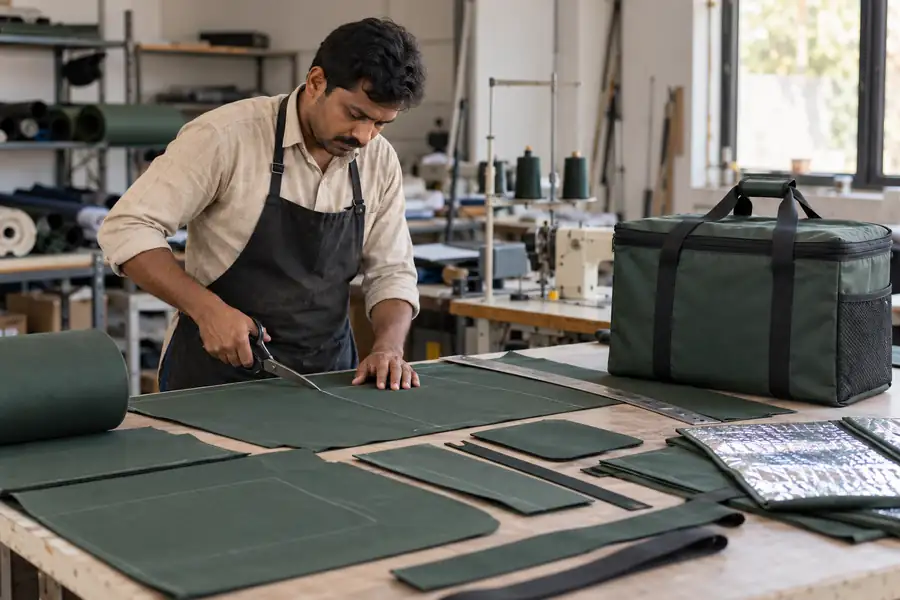
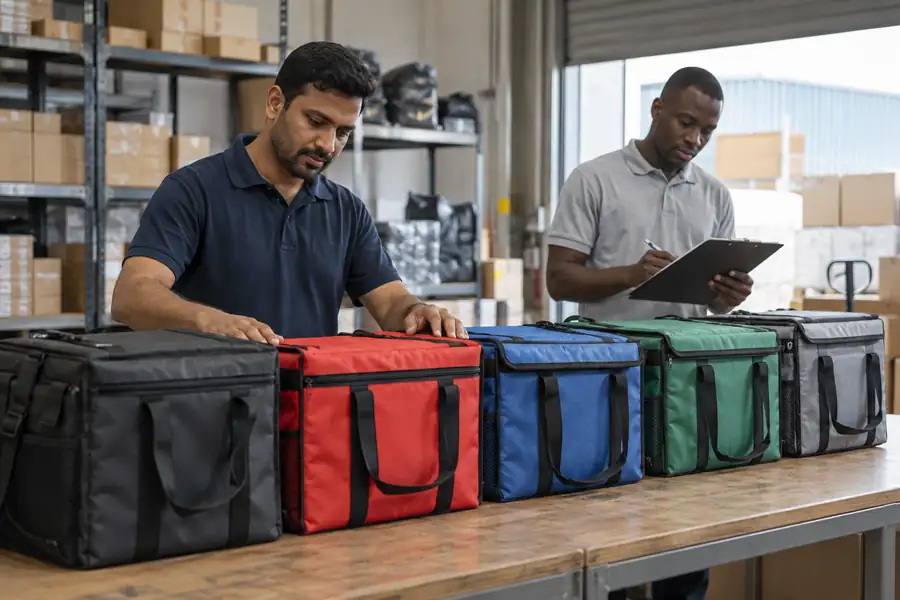
Use clear size or load identifiers so teams choose the correct carrier. A common company identity can be retained across sizes. Position labels where visible when large bags are arranged close together for dispatch.
Use a clear configuration identifier tied to the approved tray arrangement. Staff should not interpret extra space as permission for an unassessed heavier load. Keep size labels consistent across purchasing, dispatch and receiving records. Record the accepted position, colour reference and artwork revision for the particular bag configuration. Review the result on the selected material at its intended size. A screen mockup helps communicate layout but does not replace physical shade and print approval. If several variations are ordered, keep their quantities and identifiers distinct so the receiving team can compare the delivered bags with the approved visual reference.
Prepare a practical care and return routine
Inspect the base, handle attachments and long closure runs after use. Large bags need sufficient space for cleaning and drying. Plan storage so support panels are not bent in a way the construction was not designed to tolerate.
Inspect long zip runs, base wear and handle attachments after service. Provide enough storage space for the intended structure. Folding a supported bag in an unintended way can create problems even when the outer textile remains intact. Agree the responsibility and the material-appropriate care method before issuing the bags. Keep carriers awaiting attention separate from ready stock and make the inspection points understandable to the people using them. Record recurring wear so it can inform a later design review. A clear return process supports the investment in custom equipment and avoids repeated replacement without understanding whether the underlying issue concerns loading, handling, construction or storage.

Evaluate a representative sample
Test the intended tray stack at realistic weight with authorised staff. Observe lifting, vehicle placement and unloading clearance. A sample review should record whether splitting the order across two carriers produces a more manageable workflow.
Ask the actual handling team to evaluate the packed sample through unloading. Note whether another load grouping improves control. The review should establish a practical accepted configuration rather than simply demonstrate that many empty trays fit inside. Record what was checked, the sample revision and any unresolved point. Ask both the loading and receiving users to comment where their responsibilities differ. A useful approval states its scope rather than implying that every possible application has been demonstrated. Keep the observations with the order reference so a revised size, material or operating method can be compared with the configuration that was actually assessed.

Build a clear UAE wholesale enquiry
Supply tray measurements, total packed weight, handling method and any trolley dimensions. State quantities by size and desired branding. Ask for the quotation to identify construction details rather than relying on a generic extra-large label.
Prepare one reference pack containing the loading brief, measurements, selected design direction, artwork and quantities. This makes the conversation easier for purchasing and operations to follow. Identify where you need advice and where a requirement is fixed. Ask the quotation to confirm its scope, sample arrangements and proposed delivery plan. A clear written proposal is the basis for the order; general catalogue descriptions are a starting point for discussion. Keep the accepted version available so subsequent reorders can refer to it without reconstructing decisions from old messages.
An operational example to discuss
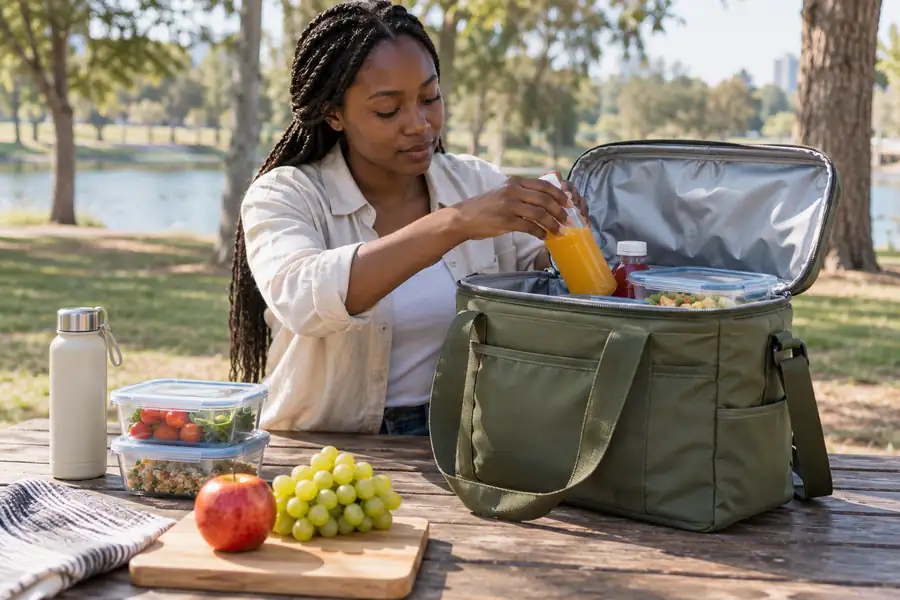
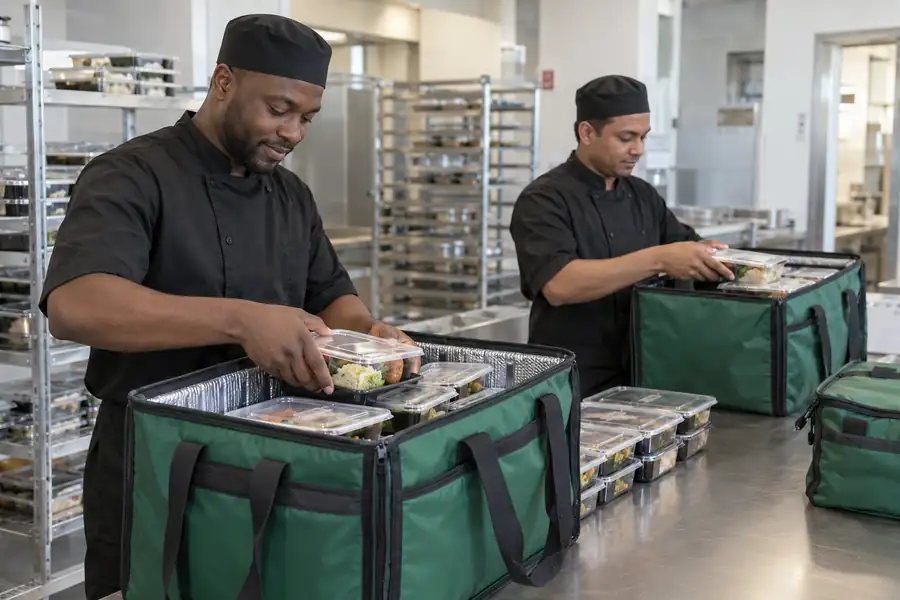
A catering order that occupies one very large carrier may be easier to manage in two medium carriers. The alternative changes handling, vehicle arrangement and receiving work. Comparing both options in a sample exercise helps the buyer make a practical choice rather than selecting maximum volume by default.
For buyers transporting larger packaged catering loads, the example is a starting point for discussion rather than a fixed specification. Compare it with your own covered trays arranged in an assessed larger load. The most useful decision is the one that improves usable dimensions and manageable lifting in the actual operation. Bring that comparison to the sample review and identify any requirement that differs. This keeps the design conversation grounded in the work the bag must perform, instead of allowing an attractive colour or a familiar catalogue shape to determine the whole purchase.
Compare one large load with two manageable loads
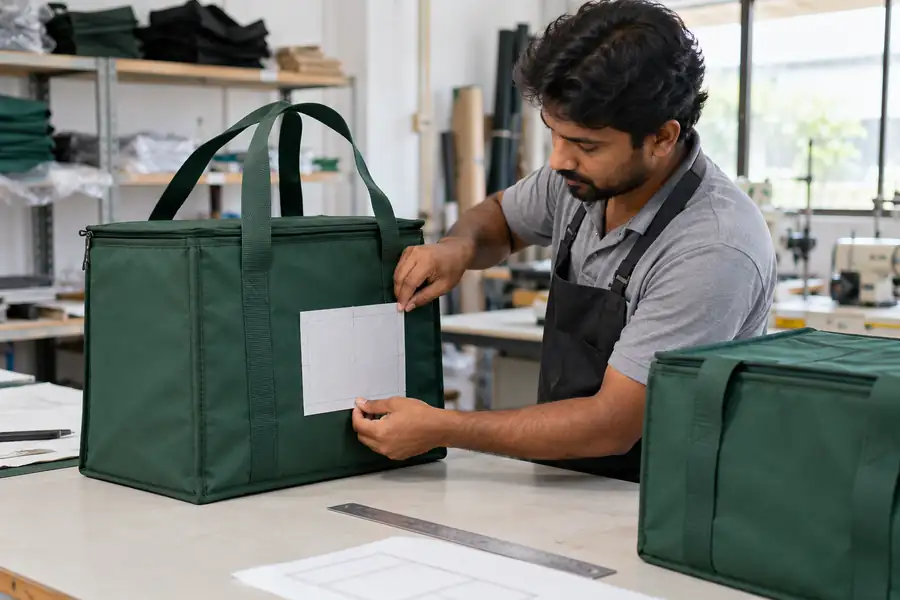
Before finalising an extra-large carrier, compare the complete handling sequence with an alternative split arrangement. The relevant question is not only how many trays fit, but how staff lift the bag, where it sits in the vehicle and how the receiving team removes the contents. Two smaller carriers may create more items to track while making each lift easier. One large carrier may simplify grouping but require a different handling method. The business should assess that trade-off using its real team and route.
Record packed weight separately from dimensions and do not treat robust-looking straps as a certified load rating. Ask the proposed construction to be reviewed against the intended use. Check the opening under load, because a wide tray may catch even when the floor footprint appears adequate. Confirm whether support components affect cleaning or storage and how they should be handled. Labels should identify the approved format clearly so staff do not substitute a larger, unassessed stack simply because space remains. The final order can then specify the accepted tray arrangement and carrying method. This gives the purchasing team a practical reference for future quantities and avoids defining large capacity as an invitation to load the carrier without a clear operating limit.
Does a larger bag automatically support a heavier load?
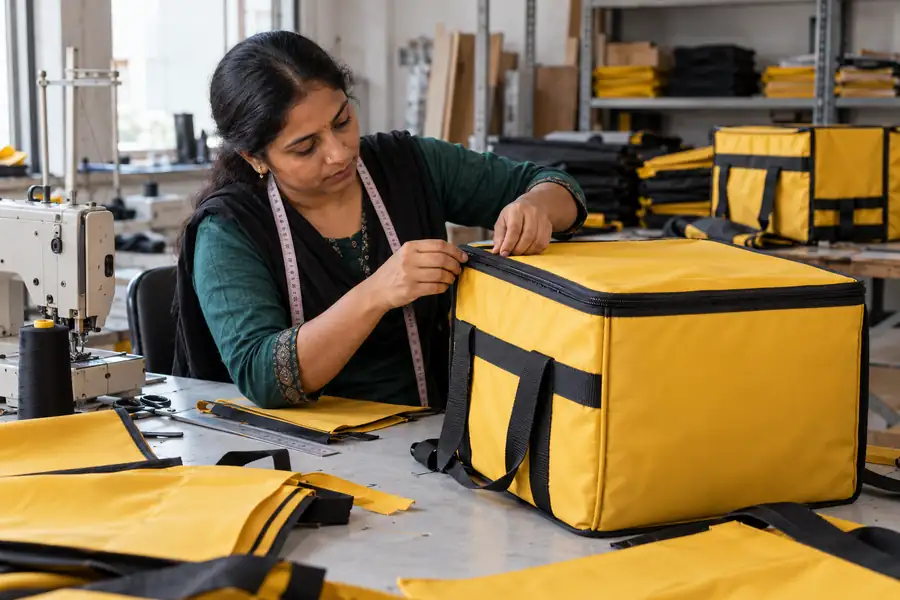
No. Size alone is not a load rating. Describe the packed weight and handling method, then assess the proposed structure and sample. Consider dividing the order if that better suits the team and route.
Supply from Sharjah across the UAE
ThermalBags.ae is part of Orient Uniforms FZE. Our office is at Block C VL01-080, Sharjah Research, Technology and Innovation Park, Sharjah, UAE. We handle business enquiries for supply and delivery from Sharjah to Dubai, Abu Dhabi, Ajman, Al Ain, Ras Al Khaimah, Fujairah and Umm Al Quwain, as well as Sharjah. Delivery arrangements are discussed for the order; these service destinations do not imply separate local offices. Tell us where the bags are required and whether the order needs one receiving point or several allocations.
To discuss large catering bags UAE, call or WhatsApp +971 50 599 2087 or email sales@orientuniforms.ae. Include your company, intended use, quantity and package dimensions. You can also identify a catalogue product as a visual starting point. For this application, a useful direction is a supported large catering carrier with balanced handles, with fabric and colours reviewed against your brief. The catalogue covers cooler bags, food delivery bags, rider bags, pizza delivery bags and burger delivery bags. Prices and construction details are confirmed through a business quotation rather than online checkout.
Further reading and reference sources
| Decision | Information to send |
|---|---|
| Bag format | Cooler, food delivery, rider, pizza or burger bag; selected SKU if available. |
| Usable size | Closed packaging dimensions, quantities per bag and packed weight. |
| Material & colour | Fabric family, shade reference, contrasting or matching webbing. |
| Branding | Artwork, print location, colours and branch-specific identification. |
| Supply from Sharjah | Bulk quantity, UAE destination, receiving details and required date. |