
Meal Plan Delivery Bags for UAE Subscription Services
Subscription meals create a repeating delivery relationship, so carrier recovery and daily consistency matter alongside appearance. ThermalBags.ae supplies custom meal-plan delivery bags from Sharjah for UAE businesses. A useful brief considers how many packs make up one delivery, whether the bag stays with the customer and how returned carriers are checked. The design should support the service model rather than assume that every subscription uses the same daily quantity or delivery arrangement.
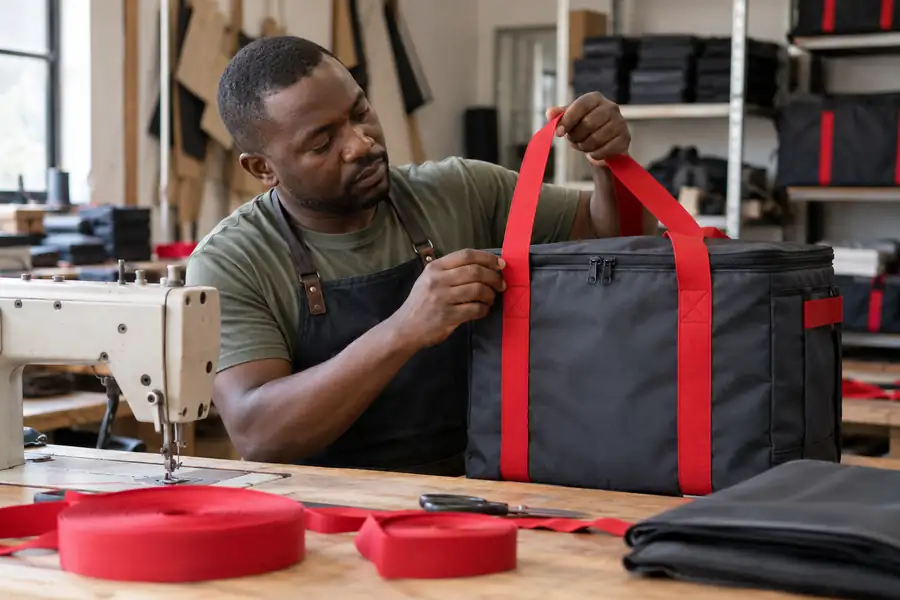
Plan the service and handover
Define the cycle from kitchen packing to customer receipt and bag recovery. Distinguish daily deliveries from multi-day packs. Keep customer-specific meal information in the approved labelling system, not permanently printed on shared bags.
A meal-plan service should map where carriers are during the full exchange cycle. Bags with customers, in vehicles and awaiting cleaning are not all available stock. The ownership model therefore influences quantity as well as identification. Keep this decision in the written operating brief and identify the person who will confirm it during sampling. The proposed feature can then be judged against a real task rather than a general preference. When the service arrangement changes, review the affected part of the specification before extending the earlier approval. That gives purchasing and the people using the bags the same practical reference for the order.
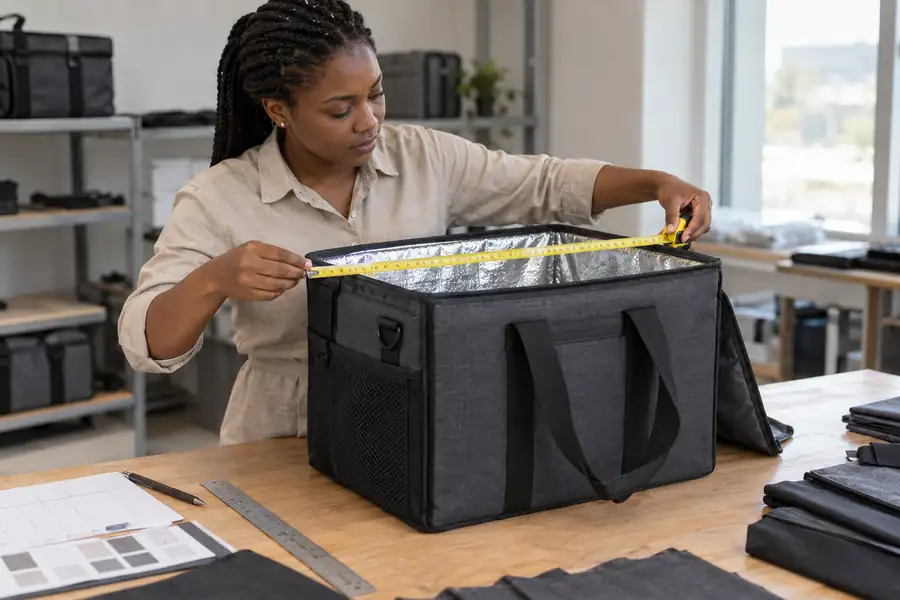
Specify useful dimensions and package clearance
Measure the complete scheduled delivery, including different tray shapes and any separately packaged snacks. A bag fitted to one menu day may not suit another. Test representative menu variations before standardising the size.
Menu rotations can change tray footprints without changing the number of meals. Test more than one representative menu day. A carrier approved for one arrangement should not be assumed to fit every future subscription package. Record the measurement and the loading observation together, using centimetres and a clear distinction between package, internal space and external size. A photograph of the closed package arrangement can support the drawing. Retain the accepted reference for repeat orders, and revisit it whenever packaging changes. This prevents a familiar catalogue name from concealing a dimensional difference that matters to the people preparing or receiving the load.
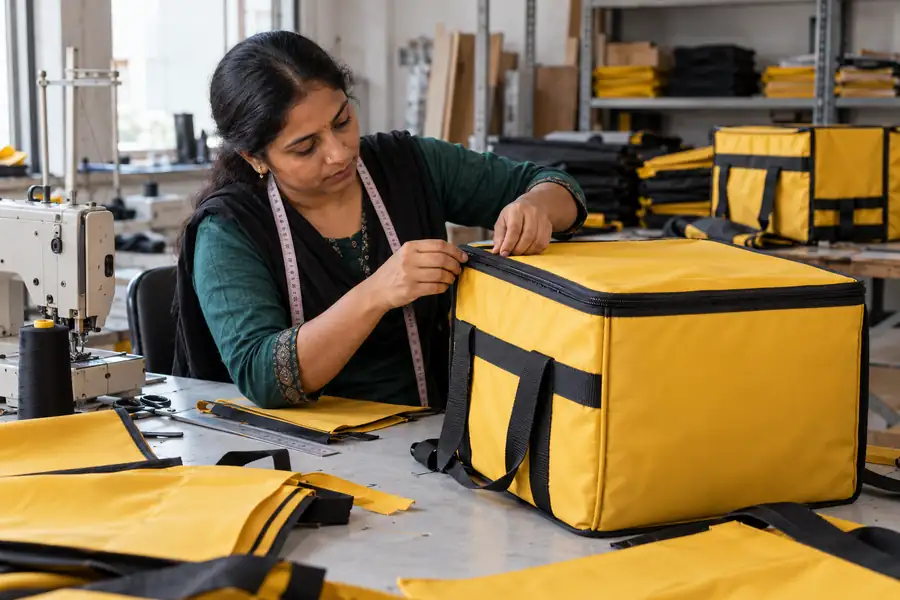
Choose handles and carrying details
Choose a carrying arrangement that remains balanced across typical loads. A wide opening helps staff verify pack counts without unnecessary handling. Consider whether the customer or driver needs to lift the bag at the final handover.
Consider who removes the meals at delivery. Driver-retained and customer-retained models create different handling needs. The opening should suit that agreed handover without requiring the receiver to lift unrelated packages to reach the final tray. Include the observation in the sample review and ask the intended users to confirm the preferred method. If a change is needed, assess the revised arrangement with the same representative contents. Do not treat an empty-bag demonstration as approval of every filled load. Where the business requires a specific handling standard or documented rating, state that requirement separately so it can be reviewed explicitly before the order.
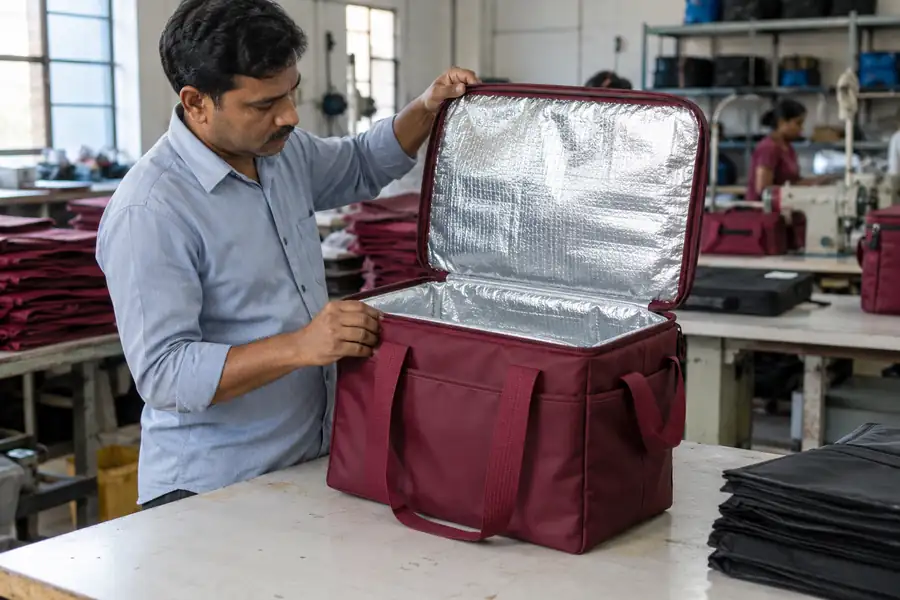
Review fabric, insulation and lining
Explain the intended meal condition and delivery process during sampling. The carrier supports an assessed food-handling system; it does not justify leaving meals unattended for an unspecified period. Keep primary packaging sealed and appropriately labelled.
Explain whether the planned delivery contains chilled, hot or separately handled packages. The bag does not justify an unspecified unattended holding period. Keep the operator’s food-handling responsibilities distinct from the proposed textile construction. Put the relevant requirement into the enquiry so the proposed materials and construction can be reviewed against it. Ask for clarification where a description is incomplete, and retain any agreed material reference with the sample record. The business remains responsible for its operating and food-handling procedures. A useful quotation identifies the construction being offered without borrowing unverified performance claims from another product or a similar-looking reference photograph.
Approve colours, straps and printing
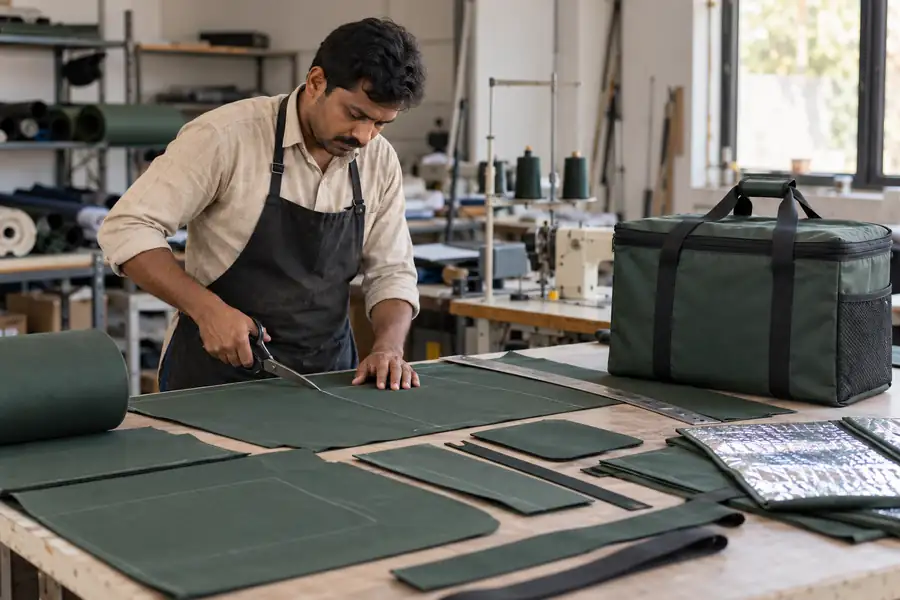
A durable service identity can sit alongside a replaceable route or account label. Avoid permanent personal details on pooled carriers. Different handle colours may distinguish sizes if that helps the packing team.
Use a permanent asset number alongside replaceable route information. Avoid printing personal customer details on pooled carriers. A consistent label position helps staff identify the outgoing order while keeping recovery records separate. Record the accepted position, colour reference and artwork revision for the particular bag configuration. Review the result on the selected material at its intended size. A screen mockup helps communicate layout but does not replace physical shade and print approval. If several variations are ordered, keep their quantities and identifiers distinct so the receiving team can compare the delivered bags with the approved visual reference.
Prepare a practical care and return routine
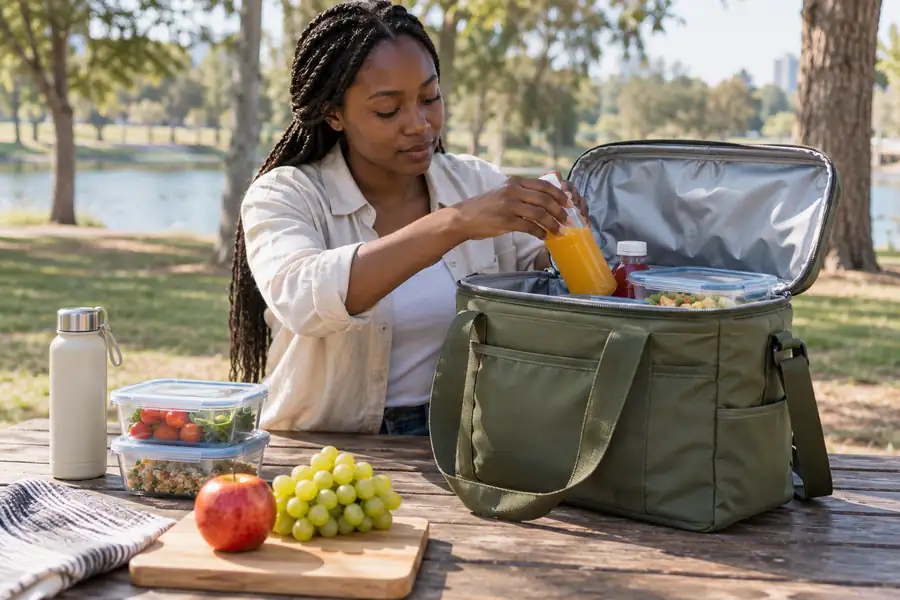
Returned bags require a defined check before reissue. Track missing carriers separately from those being cleaned or repaired. Quantity planning should reflect the complete circulation cycle, not just the number dispatched on one morning.
Return inspection should distinguish cleaning needs from damage and non-return. Each affects ready stock differently. Define where returned carriers go before reissue so they are not mixed with freshly prepared bags at dispatch. Agree the responsibility and the material-appropriate care method before issuing the bags. Keep carriers awaiting attention separate from ready stock and make the inspection points understandable to the people using them. Record recurring wear so it can inform a later design review. A clear return process supports the investment in custom equipment and avoids repeated replacement without understanding whether the underlying issue concerns loading, handling, construction or storage.

Evaluate a representative sample
Test two or more realistic menu configurations and the actual exchange process. Can staff count packs easily? Can the customer remove them without crushing labels? Include empty return handling in the review.
Test the exchange as well as the packed load. Can the driver distinguish the returned carrier, and can staff inspect it promptly? An attractive sample is incomplete if its ownership and recovery process remain unclear. Record what was checked, the sample revision and any unresolved point. Ask both the loading and receiving users to comment where their responsibilities differ. A useful approval states its scope rather than implying that every possible application has been demonstrated. Keep the observations with the order reference so a revised size, material or operating method can be compared with the configuration that was actually assessed.

Build a clear UAE wholesale enquiry
Provide meal-pack measurements, delivery frequency, ownership model, quantities in circulation and artwork. State whether the service needs one size or several menu-specific formats. Discuss any deposit or return labels separately from the bag construction.
Keep the commercial enquiry organised by configuration rather than sending an undifferentiated total. Each size, fabric, shade and print variation should have its own quantity. Add the intended use and photographs of the packed arrangement where useful. Request confirmation of sampling, timing, packing and delivery terms in the quotation. These details depend on the agreed order and should not be assumed from a catalogue image. If the requirement changes after the proposal is issued, ask for the relevant specification and commercial details to be updated together.
An operational example to discuss
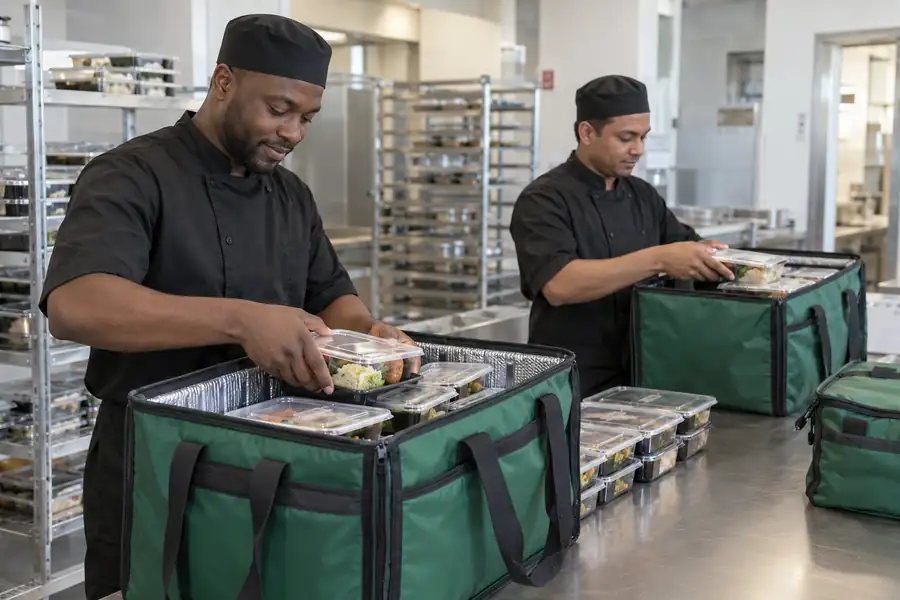
A subscription service exchanging yesterday’s bag for today’s can require more carriers than a driver-retained model. The difference is operational rather than decorative. Understanding circulation early supports sensible bulk quantities and clearer customer instructions.
For meal-plan and subscription food businesses, the example is a starting point for discussion rather than a fixed specification. Compare it with your own sealed subscription meal trays and packaged accompaniments. The most useful decision is the one that improves repeat delivery cycles and return management in the actual operation. Bring that comparison to the sample review and identify any requirement that differs. This keeps the design conversation grounded in the work the bag must perform, instead of allowing an attractive colour or a familiar catalogue shape to determine the whole purchase.
Calculate the circulation cycle before the quantity
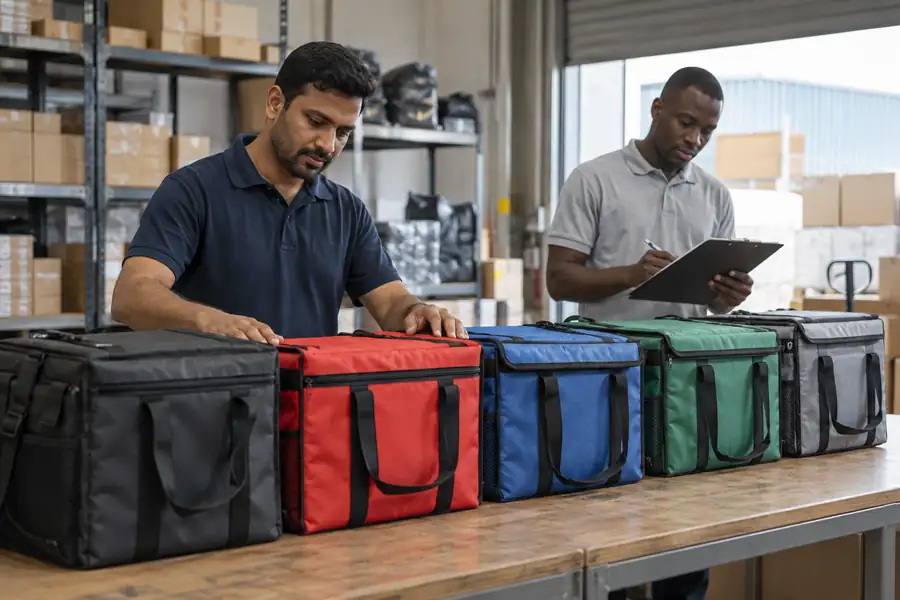
A subscription service may have bags at the kitchen, with drivers, at customer addresses and awaiting cleaning at the same time. The order quantity should reflect that circulation rather than only the number of meals dispatched in one service period. Map the stages and identify how long carriers remain outside ready stock under the intended operating model. This is a planning exercise for the business, not a universal formula imposed by the bag supplier.
Decide how missing or damaged carriers are recorded and who follows up on returns. An asset identifier can remain permanent while the route or customer label changes. Keep personal information protected and use the service’s approved records for meal details. During sampling, test the exchange process as well as the filled load. Can the driver distinguish the clean outgoing bag from the returned one? Does the customer know which carrier should be handed back? Can staff inspect the interior easily on return? These practical questions influence useful labels, opening style and storage arrangements. Menu changes also deserve review: a new tray footprint may require a revised loading pattern even if the number of meals stays constant. Keeping the circulation and packaging records together helps the subscription business place a better-informed repeat order.
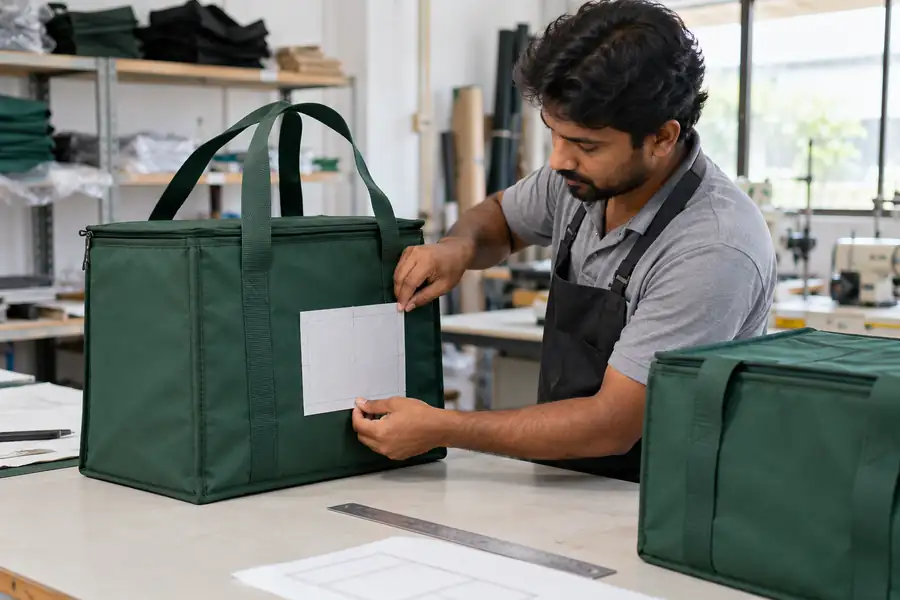
How many carriers should a subscription service order?
Base the discussion on deliveries, turnaround, cleaning and recovery, then allow for an agreed reserve. There is no universal one-bag-per-customer rule. Share the complete circulation model when requesting quantities.
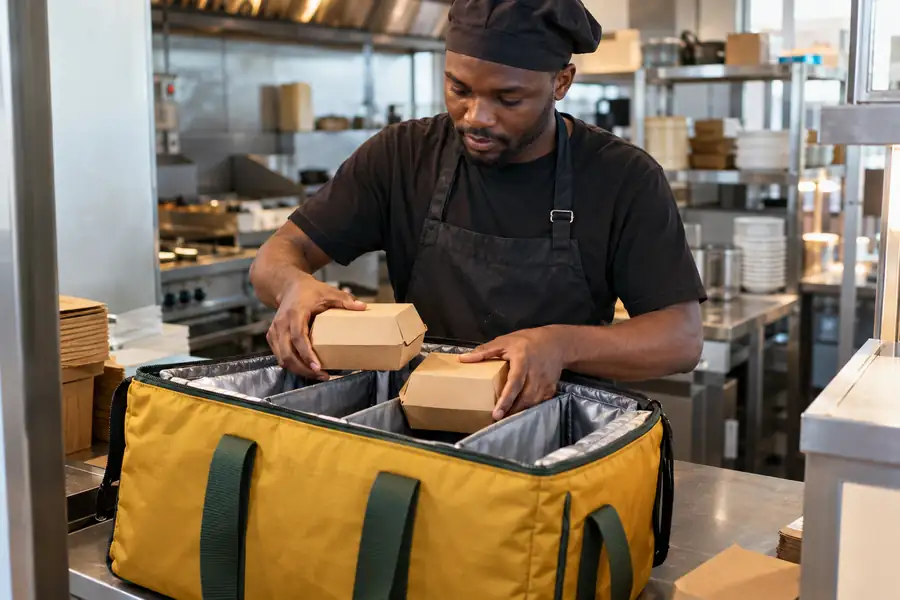
Supply from Sharjah across the UAE
ThermalBags.ae is part of Orient Uniforms FZE. Our office is at Block C VL01-080, Sharjah Research, Technology and Innovation Park, Sharjah, UAE. We handle business enquiries for supply and delivery from Sharjah to Dubai, Abu Dhabi, Ajman, Al Ain, Ras Al Khaimah, Fujairah and Umm Al Quwain, as well as Sharjah. Delivery arrangements are discussed for the order; these service destinations do not imply separate local offices. Tell us where the bags are required and whether the order needs one receiving point or several allocations.
To discuss meal plan delivery bags UAE, call or WhatsApp +971 50 599 2087 or email sales@orientuniforms.ae. Include your company, intended use, quantity and package dimensions. You can also identify a catalogue product as a visual starting point. For this application, a useful direction is a reusable meal-plan carrier sized to the scheduled pack, with fabric and colours reviewed against your brief. The catalogue covers cooler bags, food delivery bags, rider bags, pizza delivery bags and burger delivery bags. Prices and construction details are confirmed through a business quotation rather than online checkout.
Further reading and reference sources
| Decision | Information to send |
|---|---|
| Bag format | Cooler, food delivery, rider, pizza or burger bag; selected SKU if available. |
| Usable size | Closed packaging dimensions, quantities per bag and packed weight. |
| Material & colour | Fabric family, shade reference, contrasting or matching webbing. |
| Branding | Artwork, print location, colours and branch-specific identification. |
| Supply from Sharjah | Bulk quantity, UAE destination, receiving details and required date. |