
Rider Delivery Backpacks for UAE Fleets
A rider bag is carried by a person as well as used for food transport. Loaded shape, adjustment and access need assessment together. ThermalBags.ae supplies custom rider bags from Sharjah for UAE fleet buyers. A backpack worn by a courier differs from a carrier secured to a vehicle. Neither function should be assumed from a product image; explain the intended use before the construction is proposed.
Plan the service and handover
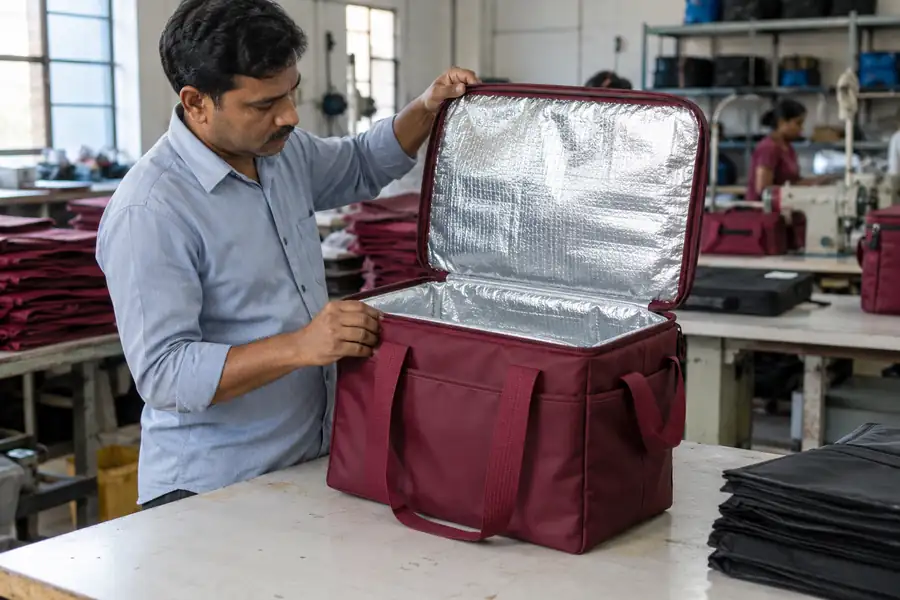
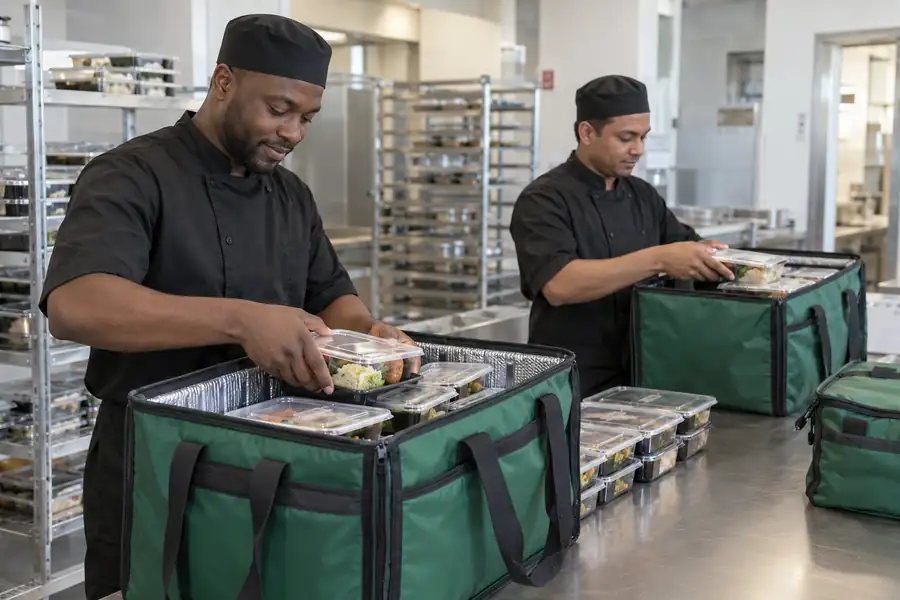
Define collection, loading and handover roles. Decide when the bag is worn or placed on a counter. The fleet should assess its operating method and any vehicle attachment separately.
A fleet should define when the carrier is worn and when it rests on another surface. These are distinct handling stages. Do not allow an attractive backpack shape to substitute for an approved operational or vehicle attachment method. Keep this decision in the written operating brief and identify the person who will confirm it during sampling. The proposed feature can then be judged against a real task rather than a general preference. When the service arrangement changes, review the affected part of the specification before extending the earlier approval. That gives purchasing and the people using the bags the same practical reference for the order.
Specify useful dimensions and package clearance
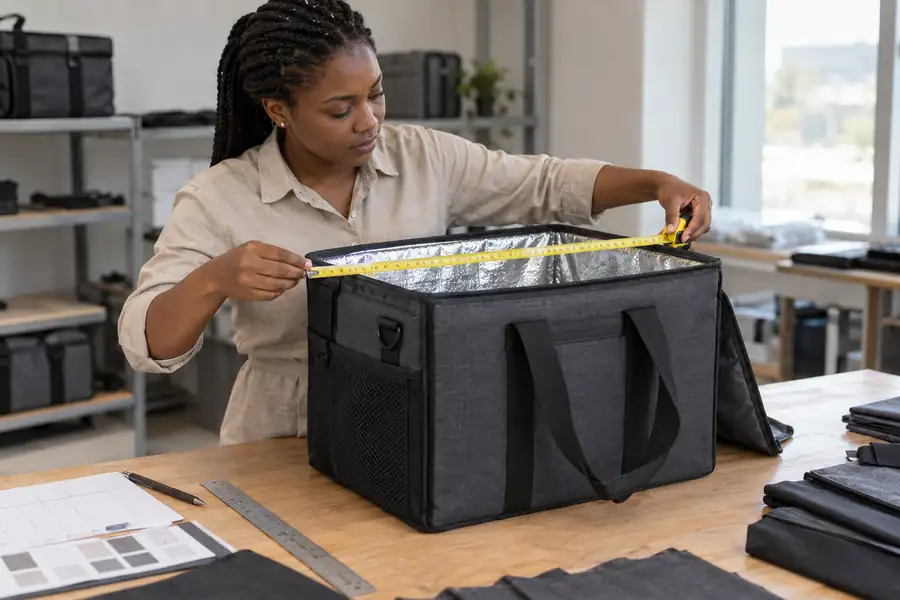
Measure packaged orders and external clearance. A tall carrier may fit boxes yet be awkward at a low counter. Record the loaded arrangement rather than relying on nominal volume.
External depth affects the loaded profile as well as internal capacity. Assess doorway and counter clearance with the intended order inside. A larger nominal volume is not automatically a better fit for the adult users or the route. Record the measurement and the loading observation together, using centimetres and a clear distinction between package, internal space and external size. A photograph of the closed package arrangement can support the drawing. Retain the accepted reference for repeat orders, and revisit it whenever packaging changes. This prevents a familiar catalogue name from concealing a dimensional difference that matters to the people preparing or receiving the load.
Choose handles and carrying details
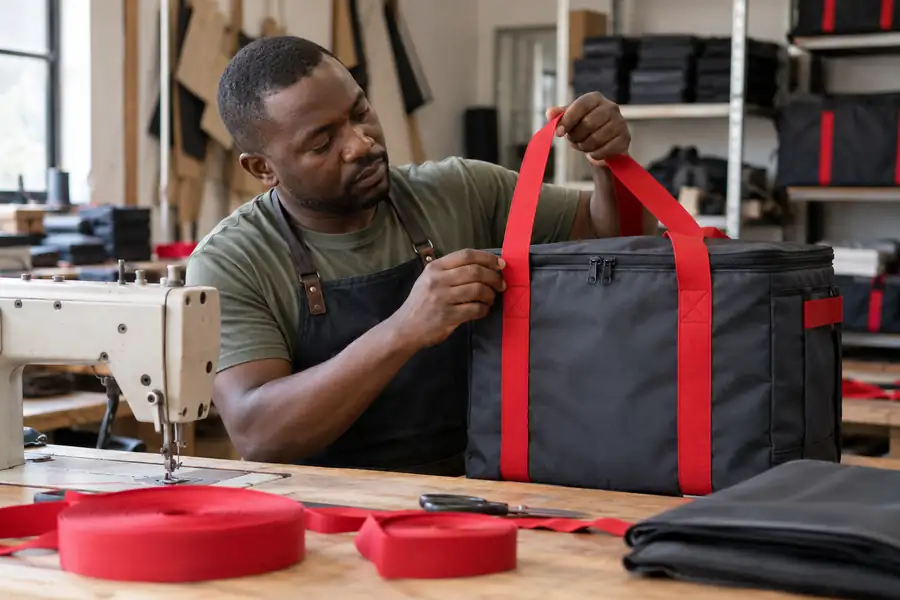
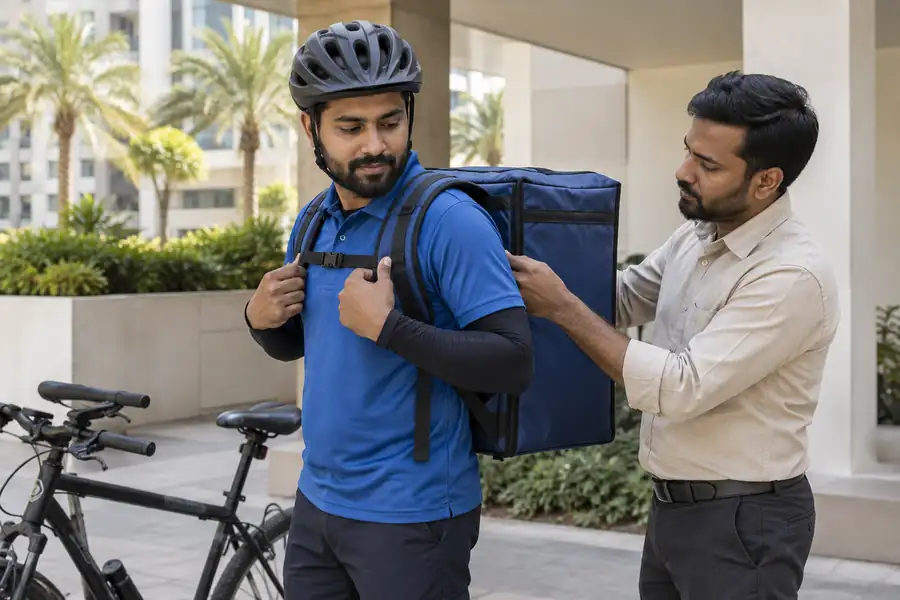
Assess adjustment, handles and straps with representative adults and realistic loads. Control loose ends. Comfort cannot be established from padding appearance or testing an empty backpack.
Ask representative users to adjust the straps and demonstrate normal handling. Note loose ends, difficult buckles and bag movement. Avoid approving a system that works only when one experienced rider uses an improvised adjustment method. Include the observation in the sample review and ask the intended users to confirm the preferred method. If a change is needed, assess the revised arrangement with the same representative contents. Do not treat an empty-bag demonstration as approval of every filled load. Where the business requires a specific handling standard or documented rating, state that requirement separately so it can be reviewed explicitly before the order.

Review fabric, insulation and lining
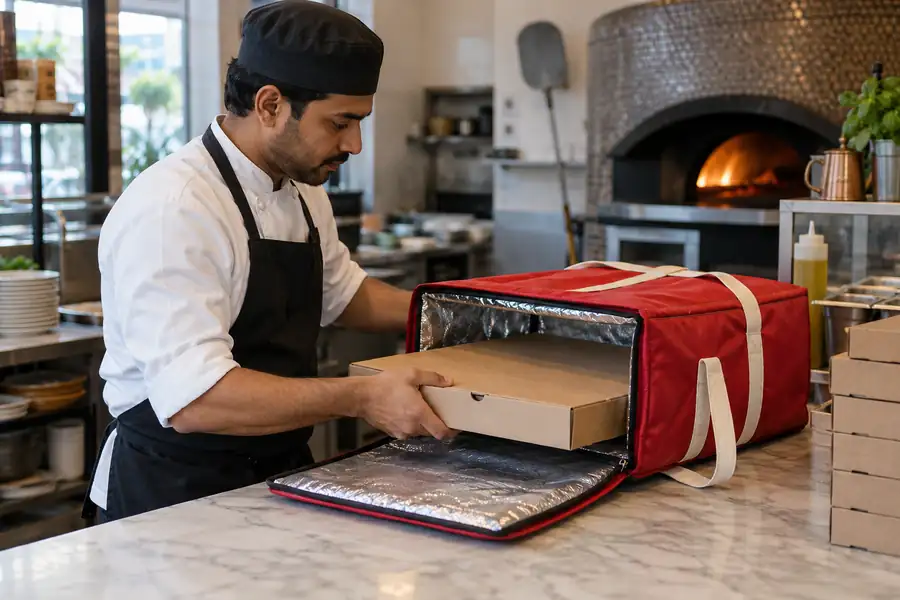
Discuss base support, dividers and access for cleaning. A wearable format still needs a suitable liner. Do not describe the carrier as protective riding equipment or infer vehicle compliance.
Back padding, food compartment support and liner access serve different purposes. Review each separately. A padded surface does not establish comfort under every load, and a structured compartment does not establish vehicle suitability. Put the relevant requirement into the enquiry so the proposed materials and construction can be reviewed against it. Ask for clarification where a description is incomplete, and retain any agreed material reference with the sample record. The business remains responsible for its operating and food-handling procedures. A useful quotation identifies the construction being offered without borrowing unverified performance claims from another product or a similar-looking reference photograph.
Approve colours, straps and printing
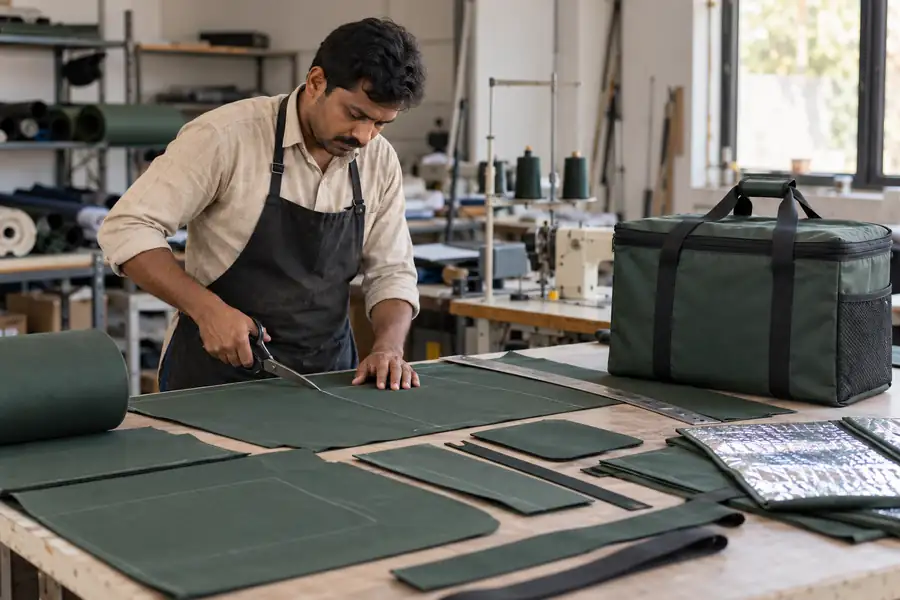
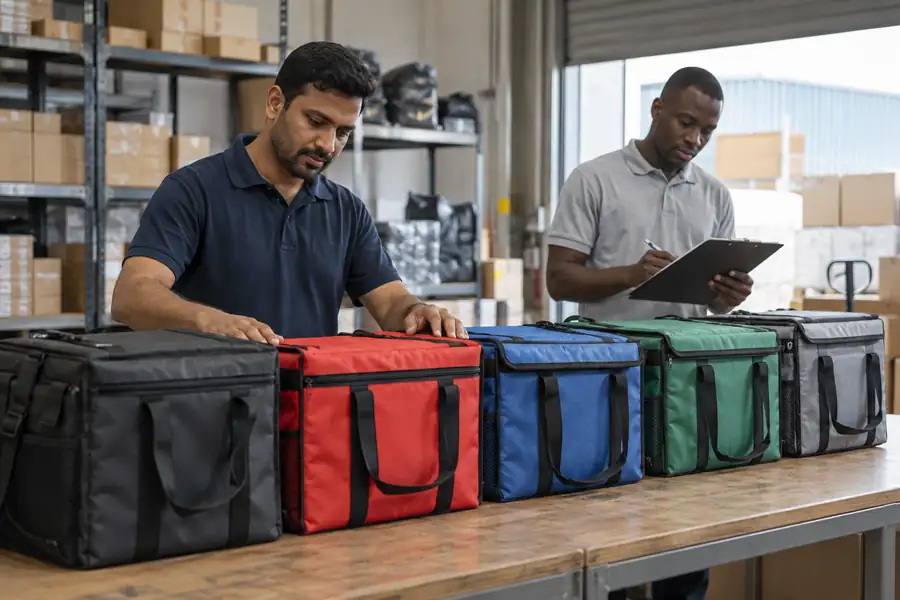
Place fleet identity where readable in the carrying position. Contrasting straps can distinguish asset groups. Discuss reflective details as an option without claiming certified visibility performance.
Fleet branding should remain visible in the actual carrying position. Reserve a distinct asset identifier for issue and inspection. Reflective trim can be discussed, but its appearance should not be presented as proof of certified visibility performance. Record the accepted position, colour reference and artwork revision for the particular bag configuration. Review the result on the selected material at its intended size. A screen mockup helps communicate layout but does not replace physical shade and print approval. If several variations are ordered, keep their quantities and identifiers distinct so the receiving team can compare the delivered bags with the approved visual reference.
Prepare a practical care and return routine
Check attachments, adjusters, zips and base wear at issue and return. Asset numbers help identify recurring damage. Remove damaged equipment for assessment even if the front panel looks presentable.
Inspect load-bearing attachments rather than only the outer fabric. Record repeated damage against the individual asset number. If a strap or adjuster is compromised, follow the fleet assessment process before the bag returns to service. Agree the responsibility and the material-appropriate care method before issuing the bags. Keep carriers awaiting attention separate from ready stock and make the inspection points understandable to the people using them. Record recurring wear so it can inform a later design review. A clear return process supports the investment in custom equipment and avoids repeated replacement without understanding whether the underlying issue concerns loading, handling, construction or storage.
Evaluate a representative sample
Ask fleet representatives to assess loading, walking, lifting and unloading in a controlled trial. Review bag movement and adjustment. Riding and vehicle use follow the fleet’s approved procedures.
Use a controlled pilot with the fleet’s approved procedures. Ask users about loading, walking and counter handover, not only appearance. Keep any vehicle-use approval separate from a successful backpack carrying trial. Record what was checked, the sample revision and any unresolved point. Ask both the loading and receiving users to comment where their responsibilities differ. A useful approval states its scope rather than implying that every possible application has been demonstrated. Keep the observations with the order reference so a revised size, material or operating method can be compared with the configuration that was actually assessed.
Build a clear UAE wholesale enquiry
Send package sizes, carrying method, adjustment needs, quantities and artwork. State attachment or visibility requirements for review. Distinguish a design preference from documented compliance requirements.
A complete enquiry should distinguish mandatory requirements from preferences. State the intended bag category, actual package measurements, quantity by variation, artwork and destination. Include any date that affects the purchasing decision, but ask the supplier to confirm feasibility in its proposal. Sampling, production timing, delivery arrangements and commercial terms are agreed for the specific order. There is no universal minimum quantity or turnaround promised on this page. Keeping the brief consistent also helps the buyer compare revised proposals without losing track of which details changed between versions.

An operational example to discuss
A fleet may use wearable backpacks for one workflow and hand-carry bags for another. Adding straps to an unsuitable shape does not create a universal solution. A pilot group can reveal handling issues before a wider rollout.
For delivery fleets and rider teams, the example is a starting point for discussion rather than a fixed specification. Compare it with your own sealed orders carried by adult couriers. The most useful decision is the one that improves loaded handling and fleet asset control in the actual operation. Bring that comparison to the sample review and identify any requirement that differs. This keeps the design conversation grounded in the work the bag must perform, instead of allowing an attractive colour or a familiar catalogue shape to determine the whole purchase.
Distinguish a wearable bag from vehicle equipment
Fleet buyers should describe where the bag is supported during every stage of a delivery. A courier may carry it on foot, set it on a counter or use a separately approved vehicle arrangement. Those situations create different requirements. A wearable backpack should not be called a motorcycle-mounted carrier merely because it has long straps. Likewise, a large box-shaped bag is not automatically comfortable to wear. The intended use must guide the construction discussion.
A representative user trial can reveal whether adjustment is practical, whether the loaded shape moves unexpectedly and whether the opening is accessible at collection. Include people who will actually handle the carrier and record their observations. Do not ask users to compensate for a poor fit by over-tightening straps or inventing an attachment method. Where visibility or vehicle compliance is required, identify the relevant requirement and evidence separately from a decorative reflective detail. Keep the asset number visible for issue and return checks, and record damage to attachment points rather than judging only the outer panel. A fleet pilot can then assess the proposed structure within its approved operating procedures before increasing quantities. This approach gives procurement a clearer decision than selecting a backpack solely because it appears large or rugged in a catalogue photograph.

Can a backpack also be mounted on a motorcycle?
Do not assume this. Describe both intended uses for assessment. A backpack strap is not automatically a vehicle restraint or an approved mounting arrangement.

Supply from Sharjah across the UAE
ThermalBags.ae is part of Orient Uniforms FZE. Our office is at Block C VL01-080, Sharjah Research, Technology and Innovation Park, Sharjah, UAE. We handle business enquiries for supply and delivery from Sharjah to Dubai, Abu Dhabi, Ajman, Al Ain, Ras Al Khaimah, Fujairah and Umm Al Quwain, as well as Sharjah. Delivery arrangements are discussed for the order; these service destinations do not imply separate local offices. Tell us where the bags are required and whether the order needs one receiving point or several allocations.
To discuss rider delivery backpacks UAE, call or WhatsApp +971 50 599 2087 or email sales@orientuniforms.ae. Include your company, intended use, quantity and package dimensions. You can also identify a catalogue product as a visual starting point. For this application, a useful direction is a structured adjustable rider backpack, with fabric and colours reviewed against your brief. The catalogue covers cooler bags, food delivery bags, rider bags, pizza delivery bags and burger delivery bags. Prices and construction details are confirmed through a business quotation rather than online checkout.
Further reading and reference sources
| Decision | Information to send |
|---|---|
| Bag format | Cooler, food delivery, rider, pizza or burger bag; selected SKU if available. |
| Usable size | Closed packaging dimensions, quantities per bag and packed weight. |
| Material & colour | Fabric family, shade reference, contrasting or matching webbing. |
| Branding | Artwork, print location, colours and branch-specific identification. |
| Supply from Sharjah | Bulk quantity, UAE destination, receiving details and required date. |